Thinking about a compact, versatile camera that balances image quality, stabilization, and everyday usability?

Quick summary
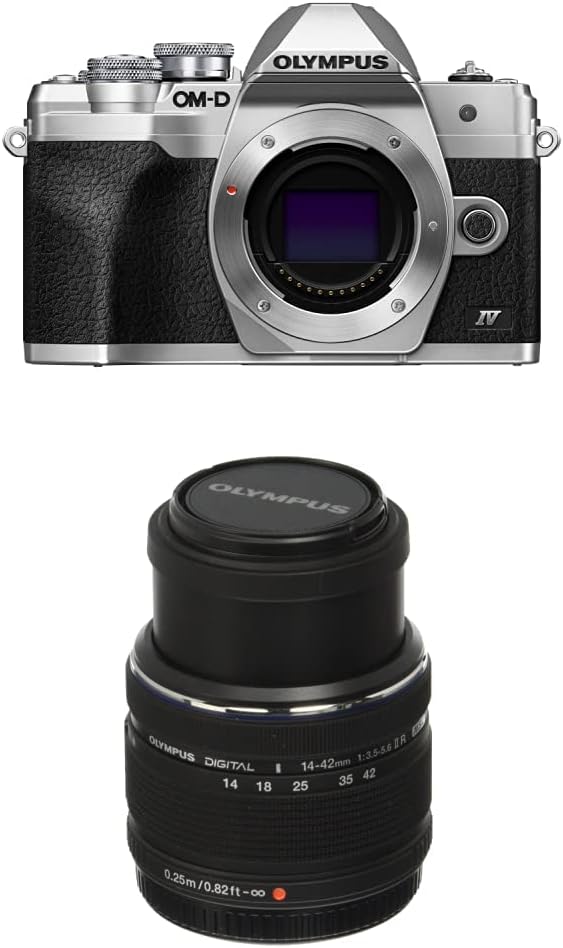
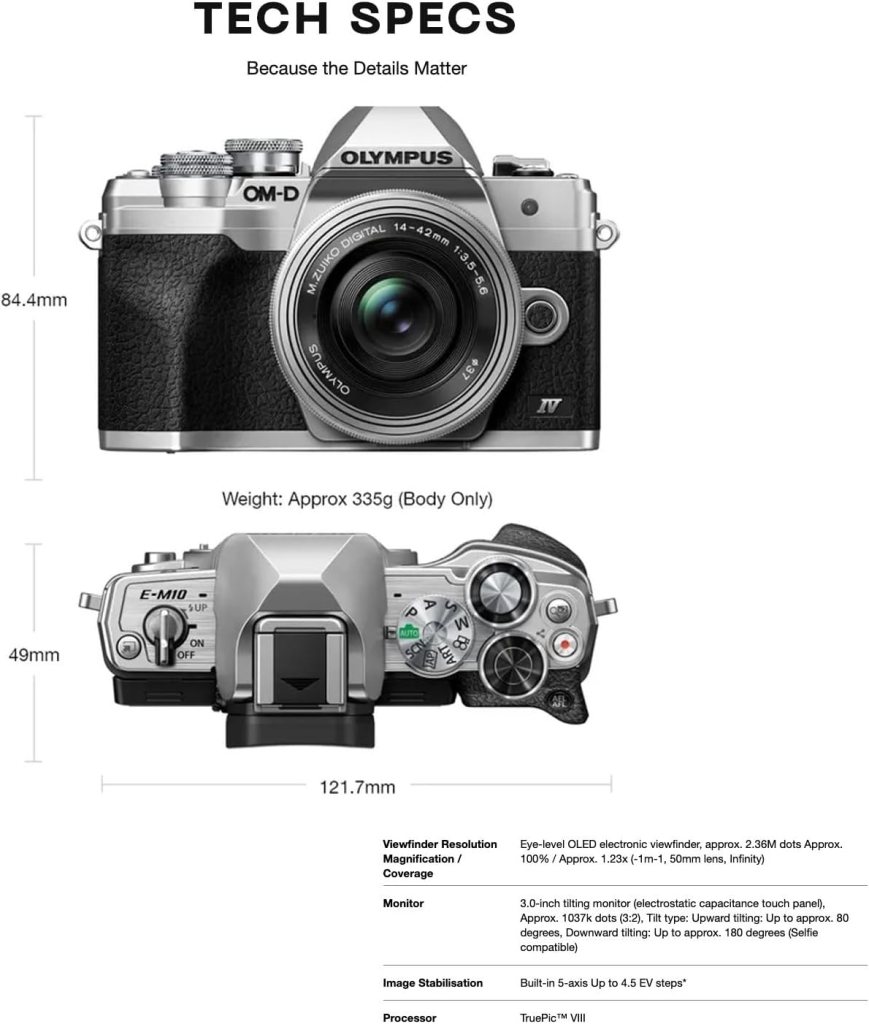
You’re looking at the OM System Olympus E-M10 Mark IV Silver Micro Four Thirds System Camera M.Zuiko Digital ED 14-42mm F3.5-5.6 EZ kit 20MP Sensor 5-Axis Image Stabilization 4K Video Wi-Fi because it promises a lot in a small package. This camera pairs a 20 MP Live MOS sensor with in-body 5-axis stabilization, creative filters, and a flip-down monitor aimed at selfie and vlogging use.
Key specifications
These are the headline specs you’ll want to know before making a deeper decision. They give you a quick idea of the camera’s strengths and the kinds of situations where it will shine.
Sensor and image quality
You get a 20 MP Live MOS sensor that’s well-suited for everyday shooting and travel photography. It won’t match full-frame dynamic range, but it delivers clean images at lower ISOs and good color rendition for most users.
Kit lens: M.Zuiko Digital ED 14-42mm F3.5-5.6 EZ
The included 14-42mm kit zoom gives you a 28-84mm equivalent field of view on Micro Four Thirds, which is a flexible range for portraits, street, and general-purpose shots. It’s compact and motorized (EZ), so it keeps the overall kit portable and pocketable.
In-Body 5-Axis Image Stabilization
You’ll benefit from OM System’s 5-axis stabilization that claims up to 4.5 shutter speed steps of compensation. That makes handheld shooting at slower shutter speeds much more practical, especially with non-stabilized lenses.
Video capabilities
You can record in 4K, which makes the camera useful for casual video and social content creation. The camera supports Wi-Fi and Bluetooth for quick transfers, and the flip-down monitor offers a selfie-optimized mode that activates automatically.
Creative tools and filters
There are 16 Art Filters (31 types) including a new Instant Film option for a retro look. Those filters let you produce stylized images directly in-camera when you want something quick and artistic.


Detailed specs table
Here’s a compact table to break down the essential specs so you can scan them quickly. This will help you compare with other models or make quick buying decisions.
| Feature | Details |
|---|---|
| Sensor | 20 MP Live MOS (Micro Four Thirds) |
| Image Stabilization | In-Body 5-Axis (up to 4.5 EV steps) |
| Kit Lens | M.Zuiko Digital ED 14-42mm F3.5-5.6 EZ (28-84mm equiv.) |
| Video | 4K recording |
| Connectivity | Wi-Fi, Bluetooth, OI Share app |
| Monitor | Flip-down touchscreen with selfie mode |
| Special Features | 16 Art Filters (31 types), Instant Film filter |
| Autofocus | Fast contrast-detect AF with face/eye detection |
| Max ISO | Typical range up to 25600 equivalent (usable range lower) |
| Burst Shooting | Reasonable continuous shooting rates for stills |
| Color Options | Silver (kit shown) |
In-depth performance: stills
You’ll want to know how this camera performs day-to-day for photos, since that’s where you’ll use it most. The E-M10 Mark IV is tuned toward hobbyists, travelers, and content creators who prioritize portability and ease of use.
Image quality in good light
In daylight and well-lit indoor scenes, the 20 MP sensor gives crisp results with pleasing color and detail. You’ll appreciate how well the JPEG engine renders skin tones and saturation straight out of camera. If you shoot RAW, you’ll have latitude to adjust exposure and color while still retaining good detail.
Low-light and high ISO behavior
You can push ISO when needed, but noise becomes more noticeable at higher settings compared to larger sensors. You’ll find images up to ISO 1600 are very usable, and ISO 3200 is okay with some noise reduction. Beyond that, noise reduction will erase some fine detail, so be selective when pushing it.
Dynamic range and shadow recovery
The sensor’s dynamic range is solid for its class, and you’ll be able to recover some shadow detail in RAW files. However, blown highlights are harder to rescue, so you’ll want to expose carefully in high-contrast scenes or use exposure compensation and highlight warning if you need to protect bright areas.
In-depth performance: autofocus and speed
Autofocus and responsiveness matter if you’re shooting people, kids, pets, or fast-moving scenes. You’ll find the E-M10 Mark IV is competent, though it sits below flagship models in speed and predictive tracking.
AF system and face/eye detection
The contrast-detect AF is fast for stills and gains accuracy with face and eye detection enabled. You’ll usually lock onto a subject quickly, and when lighting is decent, focus acquisition is snappy. In low light or with low-contrast subjects, AF may hunt more than phase-detect systems.
Continuous shooting and buffer
Continuous burst shooting is useful for action and candid moments, and the buffer allows you to capture several frames before slowing. You’ll want to test the burst behavior if you plan to photograph sports or fast-paced events often, as more advanced cameras will handle longer bursts and faster AF tracking.
In-depth performance: stabilization
Stabilization is one of the biggest practical advantages of the OM System Olympus E-M10 Mark IV, especially for handheld shooters or those using slower lenses.
5-axis stabilization in practice
With up to around 4.5 stops of image stabilization, you’ll be able to shoot handheld at slower shutter speeds without introducing blur. That’s excellent for low-light walking shots, casual travel photos, and when you want to avoid using a tripod. Stabilization also helps with video to keep pans and handheld clips smoother.
Body+lens cooperation
If you pair stabilized lenses with the in-body system, the camera coordinates correction to maximize the benefit. You’ll notice steadier images across focal lengths, and the stabilization helps you get usable shots in more situations.

Video performance details
If you plan to record vlogs, family videos, or social clips, the E-M10 Mark IV’s video features will matter to you. The camera is aimed at casual creators rather than professional videographers.
4K video and usability
You can record 4K, giving you sharper footage and flexibility when editing. The flip-down monitor makes framing yourself easy during vlogging. You’ll want to watch for rolling shutter and autofocus behavior during continuous movement, which is typical for cameras in this class.
Audio and accessories for video
Built-in microphones will capture usable audio for casual clips, but you’ll likely want an external microphone for higher-quality sound. The camera’s accessory options let you attach mics via hot shoe-adapter solutions, so you can improve audio when you need to.
Connectivity and smartphone features
You’ll find modern connectivity useful for quick sharing and remote control. The camera integrates with smartphone workflows so you can move images to your phone and post more quickly.
Bluetooth and Wi-Fi with OI Share
The always-on Bluetooth connection and Wi-Fi pairing via OI Share let you transfer images and remotely trigger the shutter. You’ll appreciate how you can update social feeds without a PC and how the connection supports geotagging and remote shooting from your phone.
Background connection and convenience
The background Bluetooth connection helps maintain pairing without repeated setup steps. You’ll find this handy when you only occasionally transfer images, as it reduces friction in your workflow.
Body, ergonomics, and controls
Handling makes a big difference between enjoying or begrudgingly carrying a camera. The E-M10 Mark IV is designed to be comfortable and intuitive for people moving from smartphone photography to a dedicated camera.
Body design and build
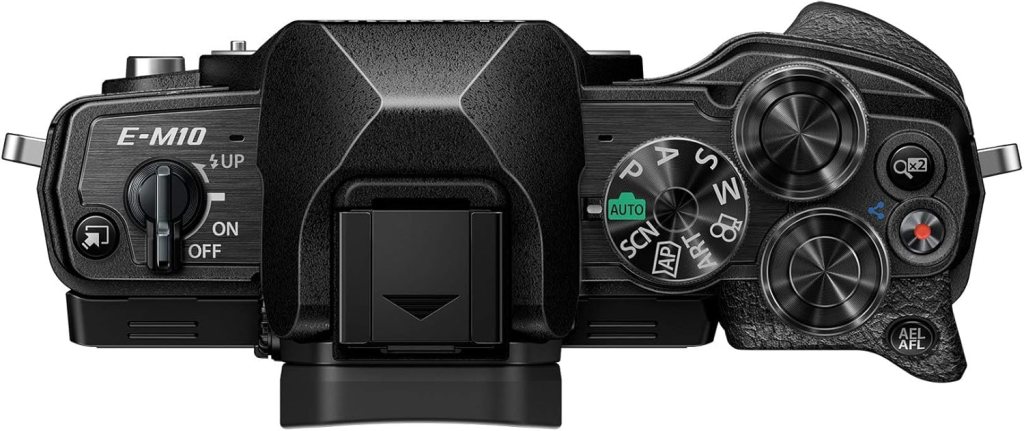
The camera has a compact, refined design that still feels sturdy. You’ll like the tactile controls and the well-sized grip for your hands, and the silver finish gives it a classic look that’s pleasant to carry around.
Controls and customization
There are dials and buttons for exposure compensation, mode selection, and other essential settings. You’ll be able to customize some controls to match your shooting style, which speeds up access to frequently used settings.
EVF and flip-down monitor
You use both the electronic viewfinder (EVF) and the flip-down monitor depending on situation and preference. Each has strengths that support different kinds of shooting.
Electronic viewfinder experience
The EVF offers a clear view for composing in bright light and helps you see real-time exposure and color. You’ll appreciate its usability when the sun makes the LCD hard to read, and it’s helpful for more deliberate photo composition.
Flip-down touchscreen benefits
The flip-down monitor is ideal for selfies and vlogging since selfie mode automatically activates when the screen flips down. You’ll enjoy the touchscreen for quick menu navigation, focus point selection, and reviewing shots.
Creative features and filters
The E-M10 Mark IV gives you creative tools built into the camera so you can make stylized images without post-processing. These are aimed at social shooters and photographers who like instant effects.
Art Filters and Instant Film
There are 16 Art Filters with 31 variations, including a new Instant Film filter for nostalgic looks. You’ll find these fun to use in-camera when you want creative output quickly, whether for Instagram posts or printed snapshots.
In-camera editing and effects
You can tweak images directly in camera, apply filters, and produce final JPEGs that are ready to share. You’ll save editing time and be able to produce different looks when you don’t have a laptop handy.
Battery life and memory
Understanding battery and storage behavior prevents surprises on long outings. The E-M10 Mark IV is efficient, but you’ll want to plan for longer sessions.
Battery endurance in real use
Battery life is reasonable for a compact mirrorless body, but heavy use of the EVF, Wi-Fi, or 4K video will reduce shooting time. You’ll likely want a spare battery if you’re out shooting all day or recording extended video sessions.
Storage and card support
You’ll use standard SD cards for storage, and a good quality UHS card helps with burst shooting and video recording. You’ll find it practical to carry multiple cards if you shoot RAW or long 4K clips.
Lenses and expandability
One of the advantages of the Micro Four Thirds system is lens availability. You can grow your kit as needs evolve without being locked to a single vendor.
Lens ecosystem and options
You’ll have access to a wide range of MFT lenses from OM System, Panasonic, and third-party manufacturers. Whether you need a fast prime for portraits, a macro lens, or a telephoto for wildlife, the ecosystem gives you choices that remain compact compared to full-frame equivalents.
Using adapted lenses
If you own lenses from other systems, adapters are available so you can experiment with different optics. You’ll lose some convenience features with certain adapted lenses, but stabilization and many body functions will still help you get good results.
Who should buy the OM System Olympus E-M10 Mark IV
This camera suits a particular user profile. If you recognize yourself here, it could be the right fit.
Ideal user scenarios
You’re a traveler, hobbyist, or content creator who values portability, image stabilization, and simple connectivity to your phone. You’ll like this camera if you prioritize a compact kit that still offers manual controls and creative features.
Not the best choice for
If you’re a professional who needs cutting-edge AF tracking for high-speed sports or the absolute best low-light performance, a larger-sensor camera might suit you better. The E-M10 Mark IV is designed for enjoyment and versatility rather than pushing technical limits for pro use.
Comparisons with close competitors
You’ll want to compare to similar models to judge value and performance. The E-M10 Mark IV competes with entry-level mirrorless models from Panasonic and older Olympus bodies.
Versus older OM-D E-M10 Mark III
Compared to the Mark III, you’ll see improved stabilization, updated sensor performance, and improved connectivity in the Mark IV. You’ll still get the same compact form factor but with better usability for selfies and video.
Versus Panasonic GX9/GX85
Panasonic’s compact MFT cameras often offer strong video features and good stabilization. You’ll find the E-M10 Mark IV matches or outperforms some Panasonic models in ergonomics, while Panasonic may edge ahead in certain video-centric features or stabilization tuning, depending on model.
Versus APS-C alternatives
APS-C mirrorless bodies (Sony, Fujifilm) deliver larger sensors and improved high ISO performance. You’ll trade some low-light and shallow depth-of-field advantages for the lighter weight and broader lens ecosystem of Micro Four Thirds if you choose the E-M10 Mark IV.
Pros and cons
You’ll want a clear list of strengths and limitations to weigh before buying. Here are the main points to consider, explained so you know how they affect real-world use.
Pros
- Excellent in-body image stabilization: You’ll find shooting handheld in lower light easier and more reliable.
- Compact and portable kit lens: You’ll enjoy carrying the camera on trips and daily outings without fatigue.
- Flip-down monitor with selfie mode: This is practical for vlogging and self-portraits, and it’s convenient when framing yourself.
- Good color and JPEG processing: You’ll get pleasant straight-out-of-camera images suitable for social sharing.
- Wide lens ecosystem: You’ll be able to expand into primes, macros, and telephotos while keeping the kit compact.
Cons
- Smaller sensor limits high-ISO performance: You’ll notice more noise at higher ISOs compared with APS-C or full-frame cameras.
- AF tracking not as strong as flagship models: You’ll need to be mindful when shooting fast-moving subjects.
- Video features are basic compared with dedicated video cameras: You’ll want external mics and better autofocus solutions for heavy video use.
- Battery life reduces with heavy use of EVF and Wi-Fi: You’ll want an extra battery for long days.
Tips for getting the best results
You’ll get more from this camera if you match your shooting style to its strengths and learn a few practical tricks.
- Use stabilization to your advantage: Slow down shutter speeds for handheld night scenes, but check for subject motion blur when people move.
- Prefer lower ISOs when possible: You’ll get the cleanest images at ISO 200–800; use a tripod if you must hold shadows and highlights in extreme contrast.
- Shoot RAW for tricky lighting: If you need to recover shadows or adjust white balance, RAW gives you more latitude than JPEGs.
- Keep firmware updated and learn OI Share: You’ll benefit from improved features and smoother smartphone integration.
- Test art filters in different scenes: Some filters work better for landscapes, others for portraits; preview them to see which you like.
Recommended accessories
You’ll want a few extras to make the most of your camera and protect your investment during outings.
- Spare battery: You’ll extend shooting sessions and avoid battery-related interruptions.
- High-quality SD card (UHS-I or better): You’ll need reliable write speeds for 4K and continuous bursts.
- Small travel tripod or monopod: You’ll stabilize shots when you need long exposures or group photos.
- External microphone (with adapter if needed): You’ll improve your video sound quality substantially.
- Protective case and lens cleaning kit: You’ll protect optical surfaces and body finish while traveling.
Final verdict
If you want a friendly, portable, and capable mirrorless camera that balances stills and casual video, the OM System Olympus E-M10 Mark IV Silver Micro Four Thirds System Camera M.Zuiko Digital ED 14-42mm F3.5-5.6 EZ kit 20MP Sensor 5-Axis Image Stabilization 4K Video Wi-Fi is a strong contender. You’ll get a camera that’s easy to carry, produces pleasing images, and offers stabilization that meaningfully improves handheld shooting. It’s especially attractive for travelers, social content creators, and hobbyists who want more control and quality than a smartphone without the weight and complexity of a larger camera system.
You’ll enjoy the camera most if you value portability, in-camera creative options, and simple connectivity. If your priorities include cutting-edge autofocus for fast action or the best possible low-light performance, consider looking at larger-sensor alternatives. For most everyday photographers and content creators, though, this OM System kit will be a satisfying and fun tool that helps you capture moments with confidence.

Disclosure: As an Amazon Associate, I earn from qualifying purchases.