

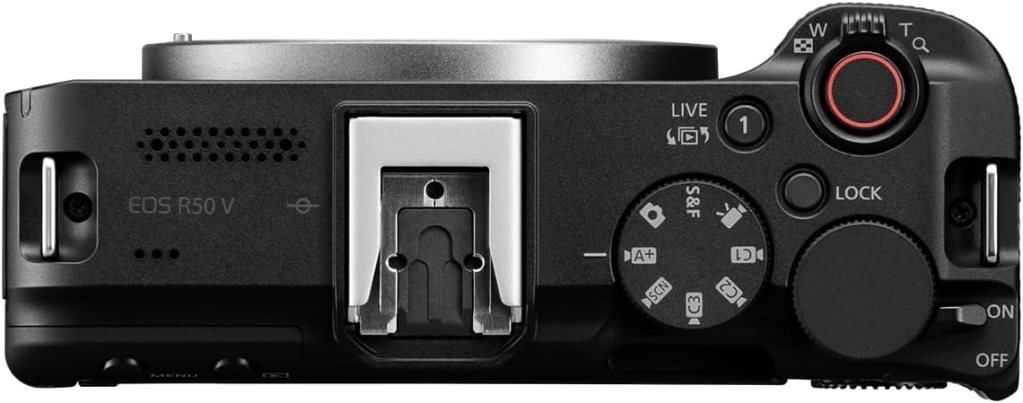
Trying to choose between the Canon EOS R50 V with the RF-S 14-30mm F4-6.3 STM PZ and the Sony ZV-1 can feel like picking between two different creative toolkits — and that’s a good thing. The Canon R50 V is a small APS-C mirrorless system with an ultra-wide zoom and the flexibility of interchangeable lenses, while the Sony ZV-1 is a pocketable, purpose-built vlogging camera with a flip screen and great out-of-the-box features for solo creators. Whether you care most about lens flexibility and image quality or about portability and simplicity, you’re in the right place to get a clear comparison.
Cameras like these grew out of a shift from bulky DSLRs to compact, mirrorless bodies and, more recently, to cameras designed specifically for creators and live-streamers. Mirrorless systems gave you better autofocus, faster shooting, and the option to change lenses; meanwhile, compact creator cameras combined good image quality with easy handling, built-in microphones, flip screens, and streaming-friendly features. Owning one of these cameras gives you more control over your visuals and sound, improves low-light performance and autofocus, and lets you produce vertical video, live streams, and polished vlogs without wrestling with complicated setups. In the article you’ll get a closer look at each model’s strengths and weaknesses, practical use cases, and which one will fit your needs and workflow best.
Canon EOS R50 V APS-C mirrorless camera with RF-S 14–30mm f/4–6.3 STM PZ ultra-wide zoom lens — ideal for vlogging, vertical video, live streaming, and content creation
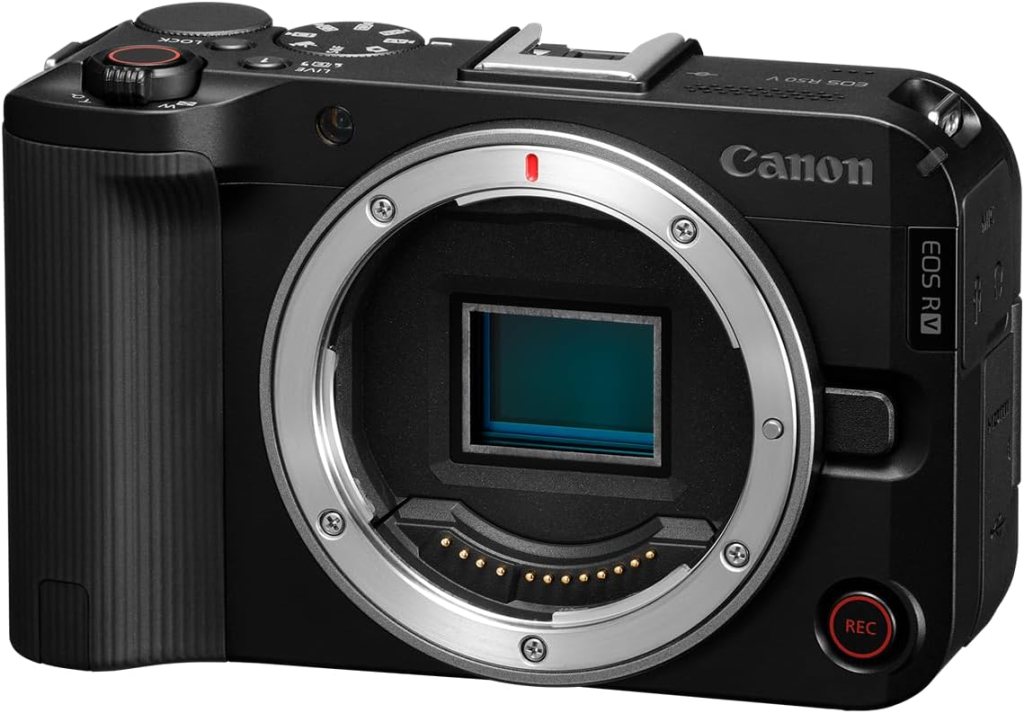
If you’re a creator focused on vlogging, vertical video, live-streaming, or hybrid photo/video work, the Canon EOS R50 V paired with the RF-S14-30mm F4-6.3 IS STM PZ lens is designed with your workflow in mind. You’ll get the flexibility of an interchangeable lens system while keeping the compact, grab-and-go feel that social-first creators need.
- Daily vlogs and sit-down videos where you want quiet, reliable autofocus and a clean, customizable control layout.
- Travel and street content when you need an ultra-wide angle zoom that still packs a good field of view (approx. 35mm equivalent of 22–48mm).
- Reels, TikToks, and short-form social clips using the Vertical Video tripod mount to shoot natively upright.
- Live-streams and product demos where intuitive controls (like the Front Record button) speed up your setup.
- Creative slow-motion or time-lapse sequences using the Slow and Fast mode settings.
You’ll appreciate that this package is tuned for creators. The redesigned user interface, Vertical Video tripod mount, and Front Record button put ergonomics and speed first — so you spend less time fiddling with settings and more time producing content.
The RF-S14-30mm F4-6.3 IS STM PZ lens gives you a broad range from ultra-wide to standard short-tele with smooth, quiet STM power zoom. That means clean, distraction-free zooms on camera and excellent frame control when shooting both stills and video.
With a 24.2 MP APS-C CMOS sensor and DIGIC X processor, you can shoot 4K 29.97p full-width, 4K crop 59.94p, and Full-HD 119.8p, letting you produce sharp 4K content and silky slow motion for dynamic storytelling. Those frame rate options give your edits more creative flexibility.
This kit aims to be a compact, all-around solution that replaces many single-purpose devices. Instead of juggling a flippy-screen phone and a compact camera, you get an APS-C mirrorless body that supports interchangeable lenses, professional-feeling controls, and features specifically tailored to social content creation. It brings the image quality and flexibility of mirrorless systems into a form factor that’s approachable for solo creators.
- Interchangeable lens system: Swap lenses as your needs evolve — wide, prime, or telephoto.
- RF-S14-30mm F4-6.3 IS STM PZ: Lightweight ultra-wide angle zoom, approx. 22–48mm (35mm equivalent), with Image Stabilization (IS) and quiet STM power zoom for smooth video zooms.
- 24.2 MP APS-C CMOS sensor + DIGIC X processor: Solid stills performance and clean 4K video.
- Video recording modes: 4K 29.97p full-width, 4K crop 59.94p, and Full-HD 119.8p for slow-motion — plus Slow and Fast mode to control creative speed effects.
- Creator-focused ergonomics: Vertical Video tripod mount, dedicated Front Record button, and a redesigned UI that makes vertical and selfie-style shooting less awkward.
- Versatility for streaming and vlogging: The camera’s interface and control layout are geared toward one-person productions.
You can start a quick live session using the Front Record button and record vertical content without awkwardly rotating the camera because of the Vertical Video tripod mount. Smooth zooms and minimal motor noise from the STM power zoom keep your audio clean during in-camera zooms. When you need dramatic slow motion, Full-HD 119.8p and the Slow and Fast mode make it easy to capture and play back footage with cinematic flair.
The Canon body in this kit maintains a compact, lightweight design so you can carry it all day without fatigue. Controls are positioned for accessible one-handed operation when you’re holding the camera for vlogging, and the UI redesign focuses on fast access to the modes and features creators use most. The lens matches the body nicely — it’s unobtrusive on a gimbal or handheld rig and feels balanced for extended shooting.
Your images will benefit from the 24.2 MP APS-C sensor paired with the DIGIC X processor, delivering pleasing detail and color rendering suitable for both thumbnails and large social posts. Video quality at 4K 29.97p is full-width, which means no significant crop for everyday 4K recordings. When you want higher-frame-rate footage, the 4K crop 59.94p and Full-HD 119.8p give you options for smooth slow motion and fast-cut pacing.
The STM lens offers quiet focusing for video, which minimizes distracting motor noise during recording. The lens’s IS helps steady handheld shots, especially at the wide end where stabilization is most effective. Autofocus performance is reliable for vlogging and solo work, keeping your face and subjects locked in during casual movement and framing changes.
This package is intentionally simple for creators who prioritize workflow. The Front Record button is a neat touch if you’re often shooting yourself — you can start recording without reaching for the top-mounted controls. The Vertical Video mount addresses a common pain point: shooting portrait orientation without awkward rigs or rotated compositions.
-
Creator-centric features: The Vertical Video tripod mount and Front Record button simplify vertical shooting and solo vlogging.
-
Versatile kit lens: The RF-S14-30mm F4-6.3 IS STM PZ is an ultra-wide angle zoom that’s quiet and smooth, perfect for video-first creators.
-
Strong video specs: 4K 29.97p, 4K crop 59.94p, and Full-HD 119.8p provide creative freedom for pacing and slow-motion shots.
-
Good image quality: 24.2 MP APS-C sensor with DIGIC X produces crisp stills and clean 4K video.
-
Compact, lightweight setup: Easy to carry around for travel, street, and daily vlogging without sacrificing lens interchangeability.
-
Designed for social platforms: Features like Slow and Fast mode and vertical mounting are real time-savers for short-form content.
-
Aperture limits: The lens’s F4-6.3 aperture range means you won’t get extremely shallow depth of field in low light; you may need faster primes for creamy background blur.
-
No in-body stabilization (if you rely entirely on IBIS): While the lens has IS, there may be limits compared to systems with sensor-shift stabilization.
-
4K crop at higher frame rates: For 4K 59.94p you’ll face a crop, which reduces your field of view compared with full-width 4K; plan framing accordingly.
-
Battery and accessory needs: As with most mirrorless systems, long recording times require spare batteries or external power solutions for extended streaming sessions.
-
Advanced controls for pros: If you’re moving toward high-end cinema workflows, you might find pros want more manual control options, larger lenses, or higher bit-rate codecs.
-
If you mainly produce social-first video and need a compact kit that’s flexible and video-forward, this is an excellent fit.
-
If shallow depth of field in low light is a top priority, plan to add a fast prime.
-
If you want the absolute widest field of view without a crop at high frame rates, check how the crop affects your intended shots before committing.
This Canon EOS R50 V with the RF-S14-30mm F4-6.3 IS STM PZ lens is an attractive option if your creative life revolves around vlogging, vertical content, and fast, on-the-go production. You get a thoughtfully designed camera body with creator-focused ergonomics, plus a lens that makes wide-angle storytelling simple and quiet. It’s a practical, modern kit that balances image quality, portability, and convenience for creators who want to level up their social content without a steep learning curve.

Sony ZV-1 Compact Vlogging Camera — Flip Screen, Built‑in Microphone, 4K HDR, Touchscreen, Live Streaming/Webcam
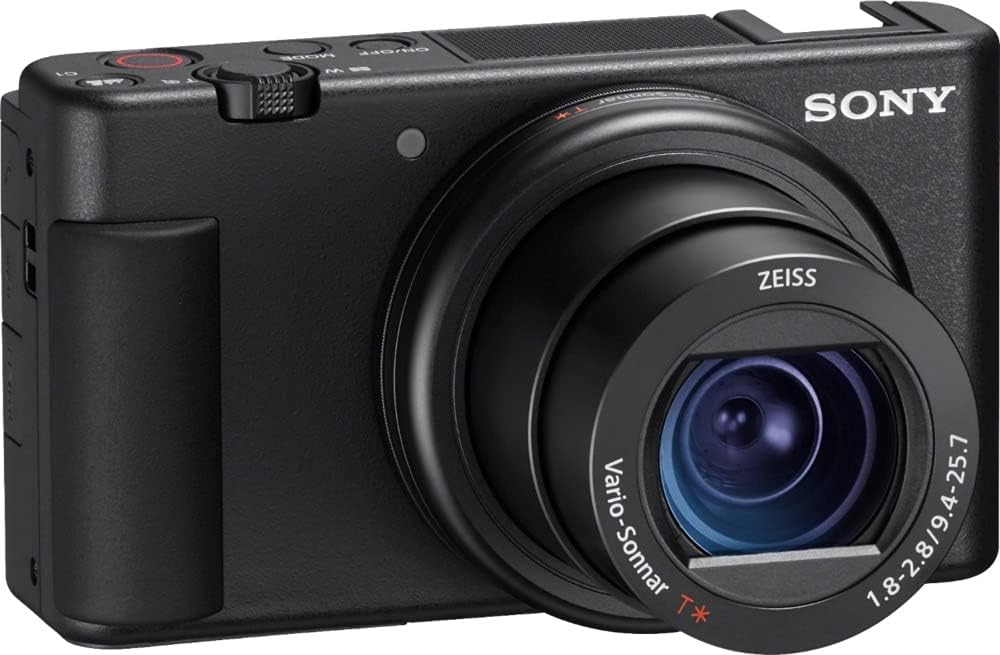
You’re looking at the Sony ZV-1 because you want a compact, powerful camera that’s made for creators. Whether you’re vlogging on YouTube, streaming live, making short-form social videos, or recording quick product demos, this camera is aimed at giving you a professional-looking result without the bulk or complication of interchangeable-lens systems. It’s ideal if you value portability, fast autofocus, and great audio straight out of the box. If you travel, record lifestyle content, or produce talking-head videos, the ZV-1 is designed to make your workflow smoother and your content look sharper.
- Daily vlogs and on-the-go YouTube episodes
- Live video streaming and webcam sessions
- Short tutorials, product reviews, and beauty content
- Quick interviews and social media reels where you need great subject separation
- Hybrid photo/video creators who prioritize video features but still want solid images
You’ll appreciate how the Sony ZV-1 removes technical barriers so you can focus on storytelling. A few standout reasons you’ll like it:
- Fast Hybrid Autofocus with Real Time Eye Autofocus gives you reliable face and eye tracking so your subjects stay tack-sharp even when moving. That means fewer retakes and more confident shooting.
- The side flip-out 3.0” LCD screen that tilts up and down makes framing selfie shots and vlogs effortless — you can always see what you’re recording.
- The built-in forward-directional microphone plus a detachable windscreen delivers clearer audio in one take. If you need more, the 3.5mm mic jack and MI shoe let you connect external mics for broadcast-level sound.
- You get 4K HDR video capability and pro video tools like HLG (Hybrid Log-Gamma) and S-Log3/2, letting you capture footage with wider dynamic range for color grading or more vivid HDR playback.
- The Product Showcase Setting is a thoughtful feature for reviewers or creators showing products; it smoothly shifts focus from your face to an object you hold up.
The ZV-1 brings together high-end imaging tech in a compact body: the 20.1MP stacked back-illuminated 1” Exmor RS CMOS sensor w/ DRAM plus the ZEISS Vario-Sonnar T lens (24-70mm equivalent, f/1.8-2.8) gives you excellent low-light performance, creamy background blur, and sharp results without carrying a big rig. The camera is purpose-built for the creator workflow — you’ll find it faster and friendlier than trying to use more generic compact cameras for serious video work.
The primary purpose of the Sony ZV-1 is to be a ready-to-go, creator-focused camera that simplifies capturing professional-looking video and decent stills. It’s tailored to vloggers, content creators, beauty influencers, travel creators, and anyone who needs reliable autofocus, great color and skin tones, and audio that’s genuinely usable without extra gear.
- 20.1MP stacked back-illuminated 1” Exmor RS CMOS sensor w/ DRAM — fast readout, lower rolling shutter, improved dynamic range.
- ZEISS Vario-Sonnar T lens — equivalent focal length 24-70mm, f/1.8-2.8 aperture for low-light and background separation.
- 4K HDR video recording; HLG and S-Log3/2 for professionals who grade footage.
- Fast Hybrid Autofocus and Real Time Eye Autofocus for accurate face/eye tracking.
- Side flip-out 3.0” LCD screen — tilts up/down for selfies and vlogging angles.
- Product Showcase Setting — instant shift in focus from face to an object for review-style videos.
- Built-in forward-directional microphone with detachable windscreen; 3.5mm mic jack and MI shoe for external audio upgrades.
- Image stabilization — helps suppress shake even while you’re walking.
- Optimized color with enhanced skin-tone reproduction — makes your faces look flattering without heavy grading.
- Live video streaming and webcam functionality — plug-and-play options for streaming to your audience.
- Bluetooth connectivity (Ver. 4.1) for remote control and easier pairing with accessories.
You’ll find the ZV-1 reduces setup friction. The autofocus means you don’t need to babysit focus pulls, the microphone catches usable audio immediately, and the flip screen keeps you confident about framing. When you need a cinematic touch, the lens aperture and sensor let you create a shallow depth of field to isolate subjects from backgrounds. For creators who want to grow quickly, these features add production quality without a steep learning curve.
The ZV-1 feels solid in hand and compact enough to fit in your pocket or small bag. You’ll notice ergonomic touches like a textured grip and intuitive button layout that favor quick setups and fast mode switching. The flip-out display is durable and flexible, so you won’t worry about positioning for vlog-style shots. Operating temperature range (0°C – 40°C / 32°F – 104°F) covers most real-world shooting conditions, though extreme climates will require caution.
Images from the 1” sensor punch above the camera’s class: clean high-ISO performance, pleasing dynamic range, and color science geared toward natural-looking skin tones. Videos in 4K HDR look crisp, with the stacked sensor and DRAM helping reduce rolling shutter artifacts — especially useful if you shoot action or fast pans. When you want to push your footage in post, S-Log3/2 gives you headroom for grading, while HLG provides an easier path to HDR delivery.
The Fast Hybrid Autofocus system combined with Real Time Eye Autofocus performs reliably for single-person vlogs and run-and-gun shots. Face and eye tracking maintain precise focus, and the Product Showcase Setting makes transitions to objects almost automatic. Optical/image stabilization reduces handheld shake, and while it won’t replace a gimbal for cinematic motion, it’s excellent for walk-and-talk sequences.
The built-in forward-directional mic is a standout — it’s designed to capture your voice clearly. Including a detachable windscreen is a welcome touch for outdoor shooting. For interviews or pro-level audio, you’ll appreciate the 3.5mm mic jack and MI shoe for wireless mic modules or shotgun mics. Overall, the audio capabilities let you record usable tracks without always needing a separate recorder.
-
Compact and portable — you can take it anywhere without lugging heavy gear.
-
Excellent autofocus — Real Time Eye Autofocus keeps subjects sharp so you can concentrate on content.
-
Great out-of-the-box audio — the built-in mic and windscreen save time and money.
-
Versatile lens — 24-70mm equivalent with f/1.8-2.8 gives you flexibility for wide environmental shots and tighter portraits.
-
4K HDR and pro video features — HLG and S-Log3/2 make it usable for creators who want to grade or deliver HDR.
-
Creator-friendly features — Product Showcase Setting, flip screen, and optimized skin tones are practical and time-saving.
-
Live streaming and webcam capability — quickly connect and go live with quality video.
-
Limited zoom range compared with some compact travel zooms — the 24-70mm equivalent is versatile but not ideal if you need very long reach.
-
Battery life can be modest if you record long 4K sessions; carrying spares is recommended.
-
The fixed lens means you can’t swap optics for ultra-wide, macro, or fast primes — you’re trading flexibility for convenience.
-
While stabilization is effective for general use, you may still want a gimbal for highly cinematic motion.
-
For multi-camera professional setups, you might need external audio and more advanced monitoring tools, but the ZV-1 covers most single-creator needs very well.
Wrap-up note for your decision If you prioritize a camera that’s low-friction, smart about autofocus, and tuned for vlogging and social video, the Sony ZV-1 is a compelling option. You’ll get a lot of pro-level tech in a compact package: 20.1MP stacked 1” sensor, ZEISS Vario-Sonnar lens, 4K HDR, Product Showcase, and real-world audio tools. It’s a camera that helps you create better content faster, with features that feel made for how you work as a creator.
Comparison — Canon EOS R50 V kit vs Sony ZV-1
Here’s a friendly, straight-to-the-point comparison to help you decide which camera fits your needs. I’ll highlight the main specifications, explain what they mean for real-world use, and show everything in a compact table so you can scan quickly.
Quick summary (who each is for)
- Canon EOS R50 V with RF-S14-30mm kit: Choose this if you want interchangeable-lens flexibility, a larger APS‑C sensor for better low-light performance and shallower depth of field, and a versatile ultra-wide-to-wide zoom that’s tuned for video. Good if you plan to grow your kit or want more control over look and lenses.
- Sony ZV-1: Choose this if you want a pocketable, all-in-one vlogging camera with a fast zoom lens, excellent autofocus, great on-board audio options (windshield + mic jack), and easy-to-use creative modes like Background Defocus and Product Showcase.
How the specs matter to you
- Sensor & image quality: The Canon’s 24.2 MP APS‑C sensor is larger than the ZV‑1’s 1″ sensor, so you’ll generally get better low-light performance, dynamic range, and easier background blur with the Canon (when using appropriate lenses). The ZV‑1’s 1″ stacked sensor is still excellent for a compact and delivers fast readout (helpful for autofocus and rolling-shutter reduction).
- Lens & versatility: The Canon kit includes an RF‑S 14–30mm F4–6.3 IS STM PZ (approx. 22–48mm equiv) — interchangeable-lens advantage. The ZV‑1 has a fixed 24–70mm (equiv) F1.8–2.8 ZEISS lens — very fast and great for low light and pleasing background separation for a compact.
- Video: Both do 4K video and are built for creators. Canon offers higher-frame 4K options (including 4K up to 59.94p in a crop mode and 4K 29.97p full-width) and Full HD at up to 119.8p for slow motion. Sony supports 4K HDR and pro video profiles (HLG, S-Log2/3) and is optimized for run-and-gun vlogging with features like Product Showcase.
- Audio and vlogging features: Sony’s on-board mic is directional and ships with a detachable windscreen; it also has a mic jack and MI shoe for more audio options. Canon emphasizes vlogger ergonomics (Vertical Video mount, front record button) and includes lens IS; you’ll likely be able to add an external mic but check specific accessory compatibility for your setup.
- Portability: Sony ZV‑1 is pocketable and ready out of the box. Canon R50 V is a mirrorless body — larger but more expandable.
Side-by-side specification table
| Specification | Canon EOS R50 V + RF‑S 14‑30mm F4‑6.3 IS STM PZ (kit) | Sony ZV‑1 |
|---|---|---|
| Sensor | 24.2 MP APS‑C CMOS | 20.1 MP 1″ stacked Exmor RS CMOS with DRAM |
| Lens (included) | RF‑S 14–30mm F4–6.3 IS STM PZ (approx. 22–48mm equivalent) — interchangeable | 24–70mm equivalent ZEISS Vario‑Sonnar T, F1.8–2.8 — fixed |
| Aperture range (kit lens) | f/4–6.3 (varies across zoom) | f/1.8–2.8 (fast, good for low light & bokeh) |
| Image stabilization | Lens IS (optical in kit lens) | Built-in stabilization (optical/electronic combo) |
| Autofocus | Fast AF system (Canon’s V-series AF tech, subject tracking) | Fast Hybrid AF, Real-time Eye AF & tracking |
| Video max / notable modes | 4K up to 59.94p (crop), 4K 29.97p full-width, Full HD 119.8p; Slow & Fast modes; Vertical video support | 4K HDR video, HLG & S-Log2/3, pro video functions; optimized vlogging features |
| Screen & articulation | Vlogger-friendly controls, Vertical Video tripod mount, Front Record button (articulation details depend on model ergonomics) | 3.0″ side flip-out touchscreen that tilts up & down (great selfies/vlogging) |
| Audio | Built for creators (front record button, vertical-video features); kit lens IS; external mic support typically available (check model ports) | Forward-directional on-board mic + detachable windscreen; 3.5mm mic jack; MI shoe |
| Connectivity / streaming | Live-streaming capable (check model app/firmware for exact specs) | Live video streaming, webcam support, Bluetooth 4.1 |
| Portability | Mirrorless body — larger than a compact, but interchangeable lenses | Pocketable compact camera — very travel/vlog friendly |
| Best for | Creators who want upgrade path, lens choices, larger sensor image quality, and flexible video framerates | Solo creators who need a compact, easy, all-in-one vlogging camera with great AF and built-in audio |
| Typical strengths | Better low-light and background separation (APS‑C) and flexibility from interchangeable lenses | Portability, fast lens, excellent built-in mic & vlogging features, easy usability |
Recommendation checklist (use this to pick)
- If you value interchangeable lenses, larger sensor image quality, and higher-frame-rate 4K options → go with the Canon EOS R50 V kit.
- If you want a compact, ready-to-go vlogging camera with excellent autofocus, built-in mic/windscreen, and a fast lens for shallow depth-of-field in a small package → go with the Sony ZV‑1.
- If you need both portability and interchangeable-lens flexibility, consider whether you can accept carrying additional lenses (Canon) or prefer the single-lens convenience (Sony).
If you want, I can:
- Narrow this down based on your exact typical shooting scenarios (travel, studio, indoor vlogging, livestreaming), or
- Build a quick pros/cons list tailored to your most-used features (audio, low-light, portability).
Conclusion
Summary
If you want the most flexibility and image quality for hybrid photo/video work, the Canon EOS R50 V with the RF‑S 14‑30mm kit lens is the stronger choice. It gives you an APS‑C sensor, interchangeable-lens versatility, and a camera body that scales with your skills and kit. If you need a compact, grab-and-go solution built specifically around solo creators and vlogging, the Sony ZV‑1 is ideal: it’s pocketable, simple to operate, and tuned for selfie-style shooting and quick content creation.
Drawbacks to consider
-
Canon EOS R50 V
- The kit RF‑S 14‑30mm F4‑6.3 lens is handy and wide, but its variable slow aperture limits low-light performance and background blur compared with faster lenses.
- Larger and less pocketable than a compact like the ZV‑1, and you’ll likely spend more if you add lenses and accessories.
- There’s a bit more of a learning curve if you’re new to interchangeable-lens systems.
-
Sony ZV‑1
- The 1‑inch sensor is excellent for a compact, but it can’t match the depth‑of‑field control and low‑light performance of an APS‑C camera.
- Fixed lens means no upgrades or focal-length swaps — what you have is what you get.
- Compact bodies can have shorter battery life and may heat up during extended 4K recording sessions.
Who should buy which
-
Choose the Canon EOS R50 V if:
- You care about maximum image quality, shallow depth of field, and the ability to grow your kit with different lenses.
- You plan to do both serious photography and video (hybrid shooters), or you want a camera that looks and feels more “professional.”
- You’ll perform live streaming or vertical video as part of a broader kit and are comfortable investing in accessories.
-
Choose the Sony ZV‑1 if:
- You want a true grab-and-go vlogging camera that’s easy to use and ideal for solo creators, travel vloggers, and quick social clips.
- Portability, simplicity, and reliable autofocus are top priorities.
- You prefer a compact setup with built-in creator-friendly features and minimal setup time.
Final recommendation
If you see yourself growing into more advanced shooting and want long-term flexibility, go with the Canon EOS R50 V and plan to upgrade the lens later. If you need a fast, fuss-free camera to start producing high-quality vlogs and social videos right away, the Sony ZV‑1 is the smarter, more portable choice. Either way, pick the one that best matches how you create — your workflow and lifestyle will determine which camera serves you best.
Disclosure: As an Amazon Associate, I earn from qualifying purchases.