

Have you ever wanted café-quality espresso and milk drinks at home without needing a mile of counter space or a second appliance?

First impressions and why I bought the AMZCHEF Espresso Machine with Grinder: 20 Bar Semi Automatic Coffee Machine with 44 Grind Settings, 4-Temperature for Hot & Cold Brew | 8mm Milk Frother for Latte & Cappuccino, Stainless Steel
When I first unboxed the AMZCHEF Espresso Machine with Grinder, I was looking for an all-in-one solution that could replace my separate grinder and espresso maker. I wanted a machine that would let me experiment with different beans and temperatures without feeling like I needed a barista certification to use it.
The unit looks solid and stainless-steel components give it a professional feel. I chose this model specifically for the built-in conical burr grinder, the 44 grind settings, and the promise of temperature stability from the PID chip.
What the package includes and my first setup
The machine arrived well-packed and included the portafilter, single and double baskets, tamper, cleaning brush, measuring scoop, and the manual. I appreciated that the initial setup was straightforward.
Filling the 1.8L water tank, attaching the hopper, and doing the first rinse cycle took less than 15 minutes. The touch screen walks you through basic steps, which made the process comfortable even for my early-morning, groggy self.
Design and build quality
The exterior is primarily stainless steel, which gives it a kitchen-friendly aesthetic that feels like it belongs next to other premium appliances. I liked that it doesn’t look overly industrial despite having a 20 bar pump and a large steam wand.
The control layout is intuitive; the smart IMD touch screen sits front and center and the hopper and water tank are easy to access. The drip tray and portafilter feel robust, and the overall construction suggests it’ll take regular daily use without showing wear quickly.
Size and counter footprint
This machine occupies a moderate footprint—bigger than a basic pod machine, smaller than a commercial prosumer unit. I measured it against my available counter space and it fit comfortably without making the area feel cramped.
If you’re short on space, you should check your counter depth and width, but in my kitchen it balanced well between presence and practicality. The 1.8L tank is large enough that I didn’t have to refill constantly during a day of multiple drinks.
Controls and display
The HD color touch display is responsive and presents grinding, brewing time, and temperature information clearly. One-touch operations make daily use quicker, but I also appreciated the ability to fine-tune settings manually for experimental shots.
I found the screen easy to read at a glance, and the icons are straightforward. There’s no learning curve for basic drinks, and the more advanced settings are accessible when I wanted to adjust grind or temperature.

This image is property of Amazon.com.
Grinder performance and 44 grind settings
The built-in stainless steel conical burr grinder is the feature that sold me on this machine. With 44 adjustable grind levels, it gives a wide range of textures from ultra-fine espresso to coarse settings suitable for cold brew.
In practice, the grinder delivers consistent particle distribution for reliable shots. I dialed in grind levels for multiple beans—everything from light, fruity Central American roasts to darker, chocolatey beans—and the machine handled them without obvious clogging or jumpy motor behavior.
How the grind settings affect flavor
I spent considerable time testing grind settings with different roast levels and found meaningful changes in extraction and flavor. Finer settings pulled more intense, syrupy shots with richer crema, while slightly coarser settings brightened acidity and highlighted fruity notes.
Because the grinder is built-in, I appreciated being able to change settings quickly between shots. That convenience made it easier to chase flavors and understand how the grind setting interacts with my tamping and temperature choices.
Hopper and dosing behavior
The hopper holds a decent amount of beans, and the dosing mechanism dispenses a consistent amount for tamping. I used the included single and double baskets to test the dosing and didn’t experience large variances cup-to-cup once I settled on a setting.
If you prefer very precise scaled dosing, you might still use a small scale for final confirmation, but for everyday use the grinder’s dosing was reliable and helped speed up my routine.
Brewing performance: pressure and temperature control
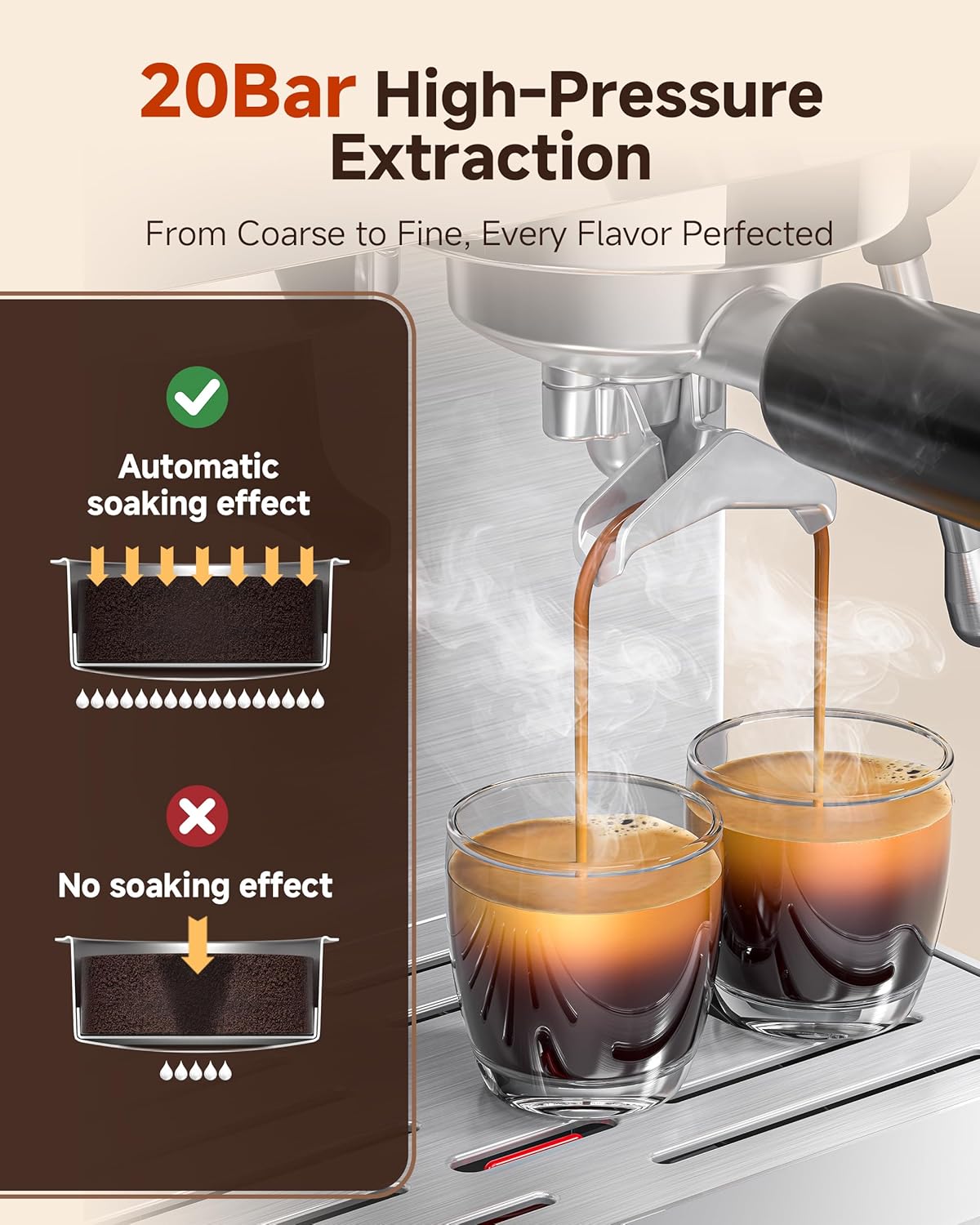
A 20 bar pump combined with a PID chip is a strong combo for a machine at this price point. The PID provides stable temperatures, and the 20 bar capability ensures consistent pressure during extraction.
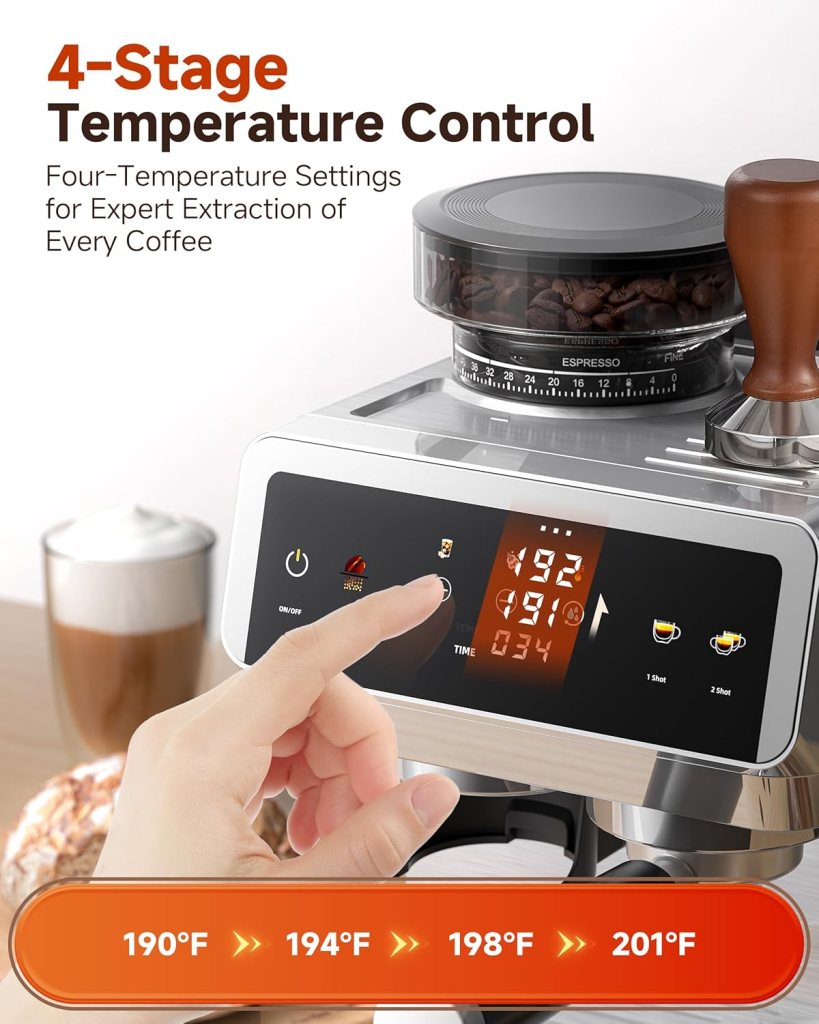
I tested the machine across its four-temperature settings (88℃–94℃) and noticed distinct differences in the cup. Lower temperatures emphasized nuttier, chocolatey characteristics, while higher temps coaxed out brighter, fruit-forward notes. Temperature stability meant fewer “bad” shots due to fluctuating heat.
Using the four temperature settings
I typically used the middle settings for most everyday beans, but I enjoyed switching to the cooler end for darker roasts to avoid harshness. For single-origin, light roasts with floral or fruity notes, the higher temperature unlocked brighter aromatics.
The ability to choose between four temperatures is particularly valuable if you like to rotate beans. It’s a simple dial to influence major flavor shifts without changing tamping or grind by large amounts.
Pressure behavior and extraction
In my testing, the 20 bar pump produced steady pressure through the shot with a nice-density crema on most shots. The machine maintains pressure and temperature well enough to pull consistent single or double espressos.
If you want to pressure profile further or do intricate manual pressure changes, this isn’t a machine with a manual paddle, but for most home baristas the pump delivers reliably and gives great results.

This image is property of Amazon.com.
Steam wand and milk frothing: 8mm stainless steel wand
The 8mm stainless steel steam wand is surprisingly powerful for a semi-automatic home machine. With the 1350W heating system, it generates steam fast and produces smooth microfoam suitable for latte art.
I practiced frothing milk for lattes, cappuccinos, and macchiatos, and the results were consistently creamy and well-textured. The wand is easy to purge and wipe clean after use, and I didn’t notice any residual milk sticking around.
Technique and results
I prioritized creating small, velvety bubbles and the wand delivered the right amount of air when I introduced it correctly. The high steam power means fewer long steaming sessions, which helps keep milk temperatures within safe ranges for texture and taste.
After a few practice runs, I was making lattes with glossy microfoam that poured well. For beginners, I recommend practicing with cold milk and a thermometer until you get comfortable with the pace.
Cleaning and maintenance of the wand
The wand design makes cleaning straightforward: purge the wand immediately after steaming, wipe with a damp cloth, and run a quick steam cycle. The 8mm opening resists clogging and simplifies maintenance.
I also used the included cleaning brush occasionally, and the one-button descaling feature reduces longer-term maintenance. Regular quick cleaning after each use minimized buildup and kept performance consistent.
Smart IMD touch screen control and usability
The HD color touch screen makes the machine feel modern and user-friendly. It shows grinding, brewing time, and temperature at a glance, which helped me understand what the machine was doing during each step.
One-touch brewing and cold brew mode provide convenience, while the display also allows manual adjustments when I wanted to tweak grind or temperature. The screen responsiveness and visibility were particularly useful during morning routines when I wanted fast, repeatable drinks.
One-touch operation benefits
One-touch presets make repeat drinks easy. I used the one-touch one-shot and two-shot functions frequently and appreciated that the machine remembers basic settings without needing me to reprogram every day.
This accessibility is perfect when I’m preparing coffee for others or making multiple drinks in a short timeframe. It’s easy to switch from grinding to steaming without navigating complicated menus.
Display clarity and feedback
The screen provides useful feedback like countdowns for brewing time and current temperature. I liked watching the brew time progress and making small adjustments to tamp or grind if needed.
The visual feedback helps me make consistent cups and speeds up the learning curve for dialing in new beans.
This image is property of Amazon.com.
Cold brew mode and other unique features
Cold brew mode is an unexpected and welcome addition on an espresso machine. With a single touch, the machine performs a brewing routine that yields smooth, cold coffee without the hours-long steeping method.
I tried the cold brew mode with medium-coarse settings and enjoyed quick, refreshing coffee that retained clarity and sweetness. While it doesn’t fully replace traditional immersion cold brew for very long steeps, it’s an excellent shortcut when I want a chilled drink quickly.
How the cold brew mode works for me
Cold brew mode uses a lower temperature and a different extraction rhythm to deliver a smoother cup. I found it especially nice for iced coffee drinks where I didn’t want excessive bitterness.
It’s a convenient feature for warm days, and I appreciated that it’s a one-touch operation—no separate brewing jar or planning hours in advance.
Other handy features
The 1.8L water tank means fewer refills, and the one-button descaling helps keep the machine in good working order. The combined grinder and brew unit saves counter space and simplifies storage and workflow.
I also liked the inclusion of accessory items like the tamper and cleaning brush, which made initial setup and daily use more seamless.
Water tank, capacity, and daily use
The 1.8L water tank is generous for a home machine and kept me brewing through multiple rounds of espresso and milk drinks without constant refills. It’s easy to remove and refill under a sink or with a measuring pitcher.
For my household of two espresso drinkers, the capacity was more than enough. If you have a larger household or frequently entertain guests, you’ll still find it convenient compared with smaller 0.5–1.2L tanks on other machines.
Accessibility and refilling
The water tank has a wide opening that makes refilling and cleaning straightforward. The clear tank also lets you visually confirm water levels quickly.
I appreciated the ability to keep water filtered or distilled if desired and the straightforward way the tank slides back into place for secure use.
Waste and drip tray behavior
The drip tray is easy to remove and clean and holds a reasonable amount of overflow before needing emptying. I recommend emptying it daily if you steam milk frequently or do many consecutive shots.
The drip tray’s grid design allowed for minimal splash and a tidy work area. Emptying and rinsing it takes only seconds.

This image is property of Amazon.com.
Cleaning, descaling, and maintenance
Daily maintenance is minimal: purge the wand, wipe the steam tip, clear the group head area, and empty the drip tray. I found these quick tasks kept the machine performing well.
For deeper maintenance, one-button descaling is convenient and reduces the time and mental load of periodic limescale removal. The burr grinder can be cleaned with the included brush and occasional deep cleaning according to the manual.
Recommended cleaning schedule
I followed a simple routine: weekly brush-out of the grinder and dosing chute, daily wipe and purge of the steam wand, and monthly descaling depending on water hardness. This routine kept extraction and steam performance consistent.
If you have very hard water, add a water softener or use filtered water to reduce scale buildup. That helps prolong component life and reduces frequency of descaling.
Ease of replacing parts and longevity
Parts that might need eventual replacement—like the steam tip or gaskets—are standard enough that replacements should be accessible. The stainless steel surfaces resisted staining and retained a clean look.
Given the robust heating system and metal components, I expect the machine to last multiple years with proper care. My impression is that AMZCHEF built sensible serviceability into the design.
Performance with different beans and roast profiles
I tested the machine with a selection of beans: light single-origin, medium blends, and darker roasts. The combination of 44 grind settings and temperature control allowed me to coax excellent flavors from each category.
Light roasts at higher temperatures expressed floral and fruity notes without tasting under-extracted. Darker roasts at lower temps produced reduced bitterness and more rounded chocolate and nutty tones.
Tips for dialing in coffee
I recommend starting with a median grind and adjusting finer for more body or coarser for more clarity. Pair grind with the temperature settings: darker roasts at 88–90℃ and lighter roasts at 92–94℃ generally worked well for me.
Use a consistent tamp and note extraction times. Once you have a baseline, small changes to grind or temperature will have predictable effects.

This image is property of Amazon.com.
Price-to-performance and value
For the feature set—integrated conical burr grinder, PID temperature control, 44 grind settings, 20 bar pump, and steam power—the AMZCHEF presents strong value. It combines multiple appliances’ capabilities into one convenient machine.
If you’re replacing a separate grinder and espresso maker, this machine simplifies workflow while saving counter space and overall cost. It’s a compelling option for home baristas who want performance without excessive complexity.
Who this machine is ideal for
I think this unit is perfect for home baristas who want a balance of automation and manual control. If you enjoy tweaking grind and temperature, you’ll appreciate the available settings. If you need café-level speed and a compact design, this is also a solid fit.
It’s less ideal for a user who needs full commercial-grade continuous use or advanced pressure profiling, but for everyday home and light entertaining it’s spot-on.
Pros and cons
I want to be honest about strengths and limitations so you can decide if the machine fits your needs. Here’s my breakdown after several weeks of regular use.
-
Pros:
- Integrated 44-setting conical burr grinder for wide grind range.
- PID temperature control with four selectable temperatures.
- Powerful 8mm steam wand with fast steaming and silky microfoam.
- Smart IMD touch screen for one-touch and manual control.
- Cold brew mode and one-button descaling for convenience.
- 1.8L water tank reduces frequent refills.
-
Cons:
- Grinder noise is noticeable during operation (typical for burr grinders).
- Not designed for heavy commercial throughput or advanced pressure profiling.
- Built-in grinder means you can’t upgrade the grinder separately without replacing the machine.
- For users who prefer absolute precision, a separate scale and external grinder may still be preferred.
Balanced summary
Overall, the positives outweigh the negatives for my use case. I value the convenience of an integrated unit that still gives me the control to adjust grind and temperature. The few compromises are reasonable for a home appliance.
Quick specs table for easy reference
Below is a compact breakdown of key specs to help you compare at a glance.
| Feature | Specification |
|---|---|
| Grinder Type | Stainless steel conical burr |
| Grind Settings | 44 adjustable levels |
| Pump Pressure | 20 Bar |
| Temperature Control | PID chip with 4 settings (88℃–94℃) |
| Steam Wand | 8mm stainless steel |
| Heating Power | 1350W |
| Water Tank Capacity | 1.8L |
| Special Modes | One-touch cold brew, one-button descaling |
| Display | HD color IMD touch screen |
| Included Accessories | Portafilter, single/double baskets, tamper, cleaning brush |
| Material | Stainless steel finish |
Practical tips I used to get the best results
I want to share a set of practical, repeatable steps that helped me extract great espresso consistently. These small habits changed my results quickly.
- Use fresh beans and store them in an airtight container away from light. Freshness dramatically improves crema and flavor clarity.
- Start with a median grind and adjust 1-2 notches finer or coarser based on extraction time. Small changes matter more than large swings.
- Purge the steam wand before and after steaming to avoid milk residue. A quick wipe prevents buildup and keeps the next froth clean.
- Preheat your cup and portafilter by running a blank shot. Temperature stabilization reduces initial cooling of the extraction.
- Keep a simple log: bean, grind setting, temperature, shot time. This helps recreate a great cup and learn what changes produce what effects.
Recipes I liked
- Classic double espresso: 18–20g dose, medium-fine grind, 25–30s extraction, 92℃ for medium roast. Yields rich, balanced espresso.
- Latte: double espresso shot + 150–200ml steamed milk to 60–65℃ with glossy microfoam. Pour slowly to get a simple heart.
- Quick cold brew-style iced coffee: Cold brew mode, medium-coarse grind, serve over ice and dilute if needed. Smooth, less acidic than quick hot-brew iced pour-over.
Comparison to similar machines
Compared with entry-level single-boiler machines without grinders, the AMZCHEF is a big step up in convenience and control. Compared with separate high-end grinders plus machines, it offers better integration and space savings at a lower total cost.
If you’re comparing to other 44+ grind setting integrated units, focus on steam power and PID presence—this machine stands out with a powerful steam wand and solid temperature control. For true prosumers who need complete modularity or commercial continuity, dedicated grinder and machine setups may still be preferable.
My recommendation based on use case
If you want a single appliance that handles most coffee formats well and reduces the steps in your morning routine, this is an excellent choice. If you prioritize ultimate component upgradeability or commercial throughput, consider separate higher-end components.
Troubleshooting notes from my experience
I kept a short list of common hiccups and how I fixed them, which might save you time if you encounter similar issues.
- Weak crema or thin shots: check grind too coarse, increase fineness slightly and ensure tamping is consistent.
- Steam power lower than expected: check water level, purge wand, and inspect for scale—run descaling if necessary.
- Grinder clogging (rare): run a few grind cycles with beans removed, brush out residue, and use a median grind for oily beans.
- Touch screen unresponsive: restart the machine and ensure the hopper or portafilter isn’t pressing on any panels. Most issues resolved with a quick reboot.
When to contact support
If you experience persistent failure to heat, severe leaks, or electrical problems, contact AMZCHEF support or your retailer. For typical performance quirks, basic cleaning and adjustment usually resolve them.
Final verdict and who should buy it
After several weeks of daily use, I found the AMZCHEF Espresso Machine with Grinder to be a highly capable, user-friendly machine that suits most home baristas. It balances automation and manual control effectively and looks good on the counter.
I recommend this machine if you want an integrated grinder, wide grind range, PID temperature control, powerful steam wand, and the convenience of one-touch modes including cold brew. It’s a strong value for anyone serious about improving their home coffee.
Closing thoughts
I enjoy that I can switch beans and get reliably different flavor profiles without swapping equipment. The combination of a responsive touch display, a wide grind range, and strong steam capabilities made it a daily driver for me.
If you want consistent espresso and silky milk without managing multiple devices, this machine is worth strong consideration.
Disclosure: As an Amazon Associate, I earn from qualifying purchases.