


Looking for a compact home theater setup that can replace a big TV without eating your living room?

First impressions of the Hisense 100L9G 4K UHD Tri-Laser Ultra Short Throw Projector
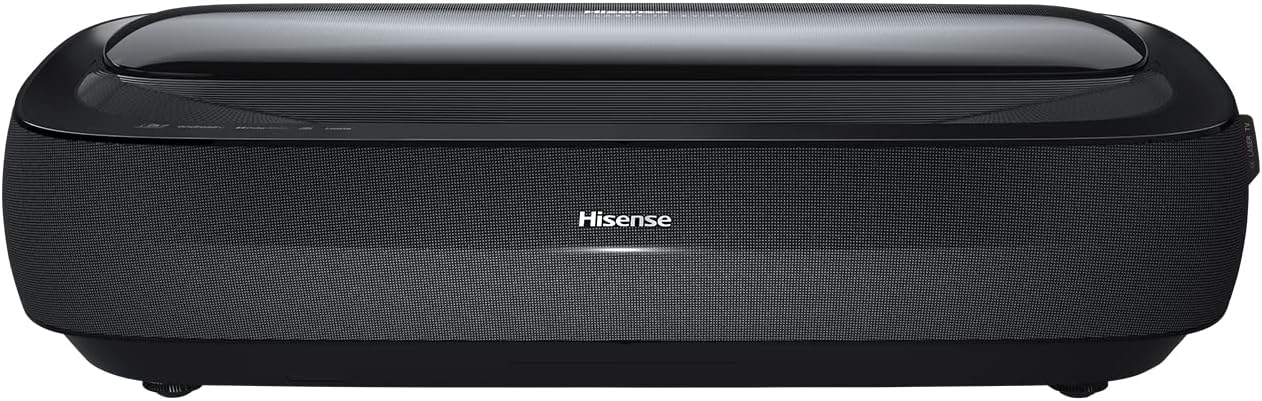
You’ll notice the Hisense 100L9G looks less like a traditional projector and more like a sleek home theater appliance meant to sit close to the wall. The ultra short throw design, tri-laser color system, and integrated smart features make it feel like a living-room-ready laser TV rather than a hobbyist projector you tuck into a ceiling mount.
Design and build quality
The housing is low-profile and modern, built to blend into contemporary living rooms where you don’t want big black boxes or ceiling rigs drawing attention. You’ll appreciate the minimal footprint and the solid-feeling construction that signals a product designed for everyday living-room use.

Detailed specifications at a glance
Below is a clear breakdown of the most important specifications so you can scan what matters quickly. I’ve included manufacturer-stated specs where available and practical notes where details can vary.
| Specification | Value / Note |
|---|---|
| Model | Hisense 100L9G 4K UHD Tri-Laser Ultra Short Throw Projector |
| Display | 4K UHD (3840 x 2160) |
| Color Technology | 3 pure-color lasers; 107% BT.2020 color space |
| HDR | Dolby Vision and HDR10 supported |
| Brightness | 3000 Lumens (manufacturer rating) |
| Motion Processing | MEMC (ultra-smooth motion processing) |
| Audio | 40W with Dolby Atmos processing; eARC supported |
| Smart Platform | Android TV (Google Play Store, built-in apps) |
| Voice Assistants | Built-in Alexa & Google Assistant |
| Throw Type | Ultra Short Throw (designed to sit close to wall) |
| Included | Projector only (screen sold separately) |
| Laser life | Typical laser systems: long life (often >20,000 hrs) — check manual for exact rating |
| Connectivity | HDMI (including eARC), Wi‑Fi, Bluetooth (varies by model) — check exact port list in manual |
| Use case | Home theater — living-room placement, large-screen viewing |
Image quality: colors, contrast, and HDR performance
You’ll get bright, punchy images thanks to the tri-laser engine that pushes color coverage up to around 107% of BT.2020—this is a meaningful jump compared to typical lamp or LED projectors. Dolby Vision and HDR10 support mean HDR content will show extended highlights and better color depth when the source and content are HDR compatible.
Brightness and handling ambient light
With a 3000-lumen rating, the projector produces a lot more usable light than many home projectors, making it more tolerant of moderate ambient light. You’ll still get the best black levels and contrast in a dimmer room, but for movie nights with a little bias lighting or regular TV watching during the evening, the brightness will serve you well.
Tri-laser color and color accuracy
Because the Hisense uses three pure-color lasers (red, green, blue), you’ll notice richer reds and greens compared with white-light-based systems that use a color wheel. If you care about color fidelity, you’ll be impressed—especially with HDR content where color volume matters. For critical color work you should calibrate, but out of the box the image is vivid and impressively saturated without being oversaturated.
Resolution, detail, and motion
The 4K UHD resolution delivers fine detail on large screen sizes, and the MEMC motion processing helps keep sports and fast-paced action feeling smooth and legible. You’ll see fewer motion artifacts and less blurring during quick pans, which improves clarity for gaming and sports. Keep in mind that MEMC sometimes introduces a slight “soap opera” effect depending on your preference and content, but you can usually adjust or turn it off.
Screen requirements and uniformity
Because this is sold as “projector only,” you’ll want to pair it with a dedicated screen—ideally an ALR (ambient light rejecting) screen if you plan to use it in a room with ambient light. You’ll get the most uniform, bright image on a quality screen designed for ultra-short-throw projectors; otherwise wall texture and surface color can subtly affect the picture.

Sound and built-in audio
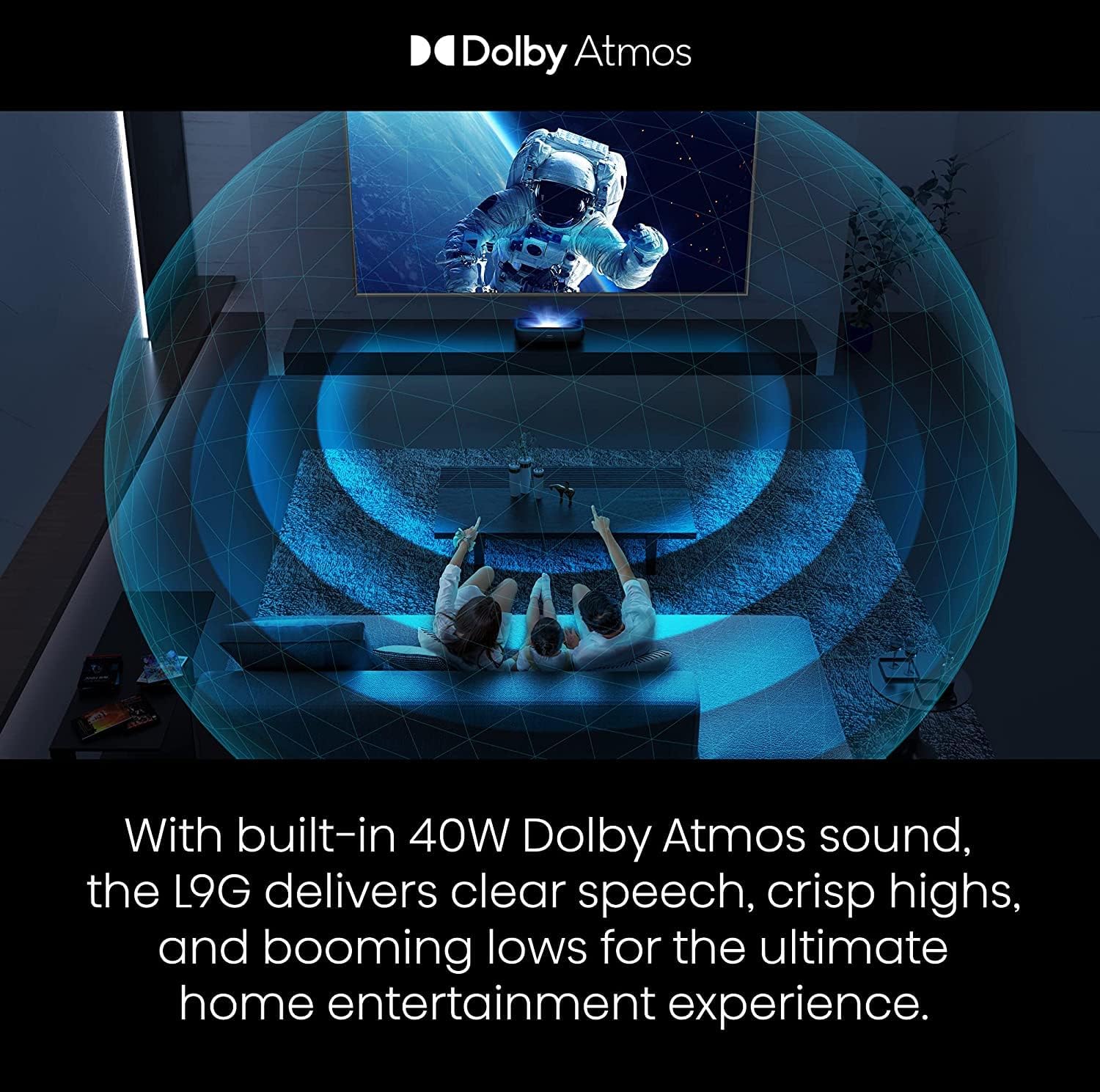
You’ll find the built-in audio surprisingly capable for a projector, with 40W of power and Dolby Atmos processing intended to give a fuller, more immersive soundstage than typical projector speakers. For casual TV watching and movies, the internal system does a good job giving you body in dialogue and some sense of spatial audio.
eARC and adding a surround system
If you’re building a full surround setup, eARC support is a big plus because it lets you send object-based audio streams (Dolby Atmos, for example) to an external receiver or soundbar without loss. You’ll want to use eARC if you want the best immersive audio experience; otherwise the internal 40W system is sufficient for many viewers.
Smart features and interface
The Hisense 100L9G runs Android TV, which means you’ll have easy access to mainstream streaming apps and the Google Play Store for additional apps. You’ll find a familiar and responsive interface if you’ve used Android TV devices before, and the ability to sideload or add apps gives you flexibility.
Built-in voice assistants
Having both Alexa and Google Assistant built in makes voice control convenient. You’ll be able to ask the projector to launch apps, search for content, control playback, and adjust settings using the remote or a paired smart speaker.
App availability and updates
You’ll have access to the major streaming services right away, and the projector supports app installation and firmware updates through the platform. You’ll want to keep firmware up to date to get interface improvements and compatibility fixes over time.
Gaming performance
If you play consoles or PC games, you’ll appreciate the system’s responsiveness and motion handling, though you should check specific input lag numbers for competitive gaming. You’ll benefit from 4K clarity, and the MEMC/fast motion processing improves visual smoothness on fast titles.
Input lag and refresh rates
Hisense emphasizes fast response and motion handling, but if you’re a hardcore competitive gamer you’ll want to verify input lag numbers either from manufacturer specs or independent reviews. For casual and mainstream gamers, the combination of 4K detail and MEMC provides a compelling gaming picture.
Console compatibility and features
You’ll be able to connect current consoles and streaming boxes via HDMI; for features like variable refresh rate (VRR) or 4K@120Hz, check the exact HDMI version and gaming features in the detailed spec sheet. If those advanced gaming modes matter, confirm before purchase.
Installation and the benefits of ultra short throw
The ultra short throw format means you can place the projector very close to the screen or wall—usually inches rather than feet—and still get very large images. You’ll like this if you don’t want cables running to a ceiling mount or if you want a minimal, furniture-level installation.
Placement tips and practical setup advice
Place the projector on a low cabinet directly in front of the screen or on a dedicated console, and aim for a flat, stable surface. You’ll want to allow some clearance for ventilation and easy access to ports and the remote receiver.
Screen types and recommended setups
If your room gets regular ambient light, choose an ambient light rejecting (ALR) screen designed for ultra short throw projectors. If your room is darkened for movie nights, a standard high-gain projector screen will maximize perceived contrast and black level depth.
Picture calibration and tricky settings
You’ll get better results by spending a little time with the picture modes and calibration tools. Adjust color temperature, gamma, brightness, contrast, and any HDR tone-mapping options to suit your room and content.
HDR tone mapping and brightness management
Understand that HDR content is mastered for displays with different peak brightness ranges, so the projector’s HDR tone mapping aims to reproduce the intent without clipping highlights or crushing shadows. You’ll likely want to test preset HDR modes and adjust for your room’s ambient light.
Professional calibration considerations
If you want the most accurate color reproduction, a professional or DIY calibration using a colorimeter and calibration software will give you the best results. After calibration, you’ll notice improved grayscale tracking and more accurate color across the full brightness range.
Pros and cons — concise guide for decision-making
You’ll find clear strengths and some trade-offs in this product, summarized to help you decide quickly.
Pros:
- Outstanding color volume from tri-laser system, with vivid, accurate colors.
- Strong brightness for a home projector (3000 lumens), usable in moderate ambient light.
- Dolby Vision and HDR10 support for modern HDR content.
- Built-in Android TV with Google Play and voice assistants for a simple smart TV experience.
- Good built-in audio (40W Dolby Atmos) and eARC for external systems.
- Ultra short throw allows large images with minimal space impact.
Cons:
- Projector-only package means you must buy a screen for best results.
- Some settings may require calibration to avoid oversaturation or aggressive motion smoothing.
- For hardcore competitive gaming, confirm input lag and advanced HDMI features before choosing.
- Despite strong brightness, blacks will still improve in darker rooms—so optimal viewing still benefits from some light control.

Who should buy the 100L9G and who shouldn’t
If you want a large, TV-like image in a living room without a ceiling mount, this projector is a strong candidate. You’ll especially appreciate it if color accuracy, HDR performance, and built-in smart features are priorities.
If you need a compact portable projector, a bake-and-go projector for bright daylight watching without a screen, or a unit solely for competitive gaming with guaranteed low input lag and 4K@120Hz support, you might want to compare alternatives first.
Comparison with large TVs and other projectors
You’ll find that laser TV projectors like the 100L9G offer significantly larger image sizes at a lower cost per inch compared to large OLED or LED TVs. Images can feel more cinematic and immersive. The trade-off is that projectors still struggle with absolute black level in well-lit rooms compared to OLED panels; however, the tri-laser’s color volume and HDR handling narrow that gap for many viewers.
When compared to traditional lamp-based projectors, you’ll enjoy faster turn-on times, longer lifespan, and more consistent color performance with a laser unit. Against other laser UST projectors, this model stands out because of the tri-laser approach and integrated smart platform.
Accessories and add-ons you should consider
You’ll want to pair the projector with a few items to get the most out of it:
- ALR screen designed for ultra short throw placement (reduces ambient light washout).
- eARC-capable soundbar or AV receiver if you want a full audio upgrade.
- Good-quality HDMI cables, ideally certified for the features you need (e.g., HDMI 2.1 for advanced gaming features).
- Surge protector or power conditioner to protect electronics.
- Remote batteries and optionally a universal remote if you prefer consolidated control.
Maintenance, laser life, and longevity
Laser projectors are low-maintenance compared to lamp projectors since there’s no bulb to replace. You’ll still need to keep vents and intake grills free of dust and occasionally clean the exterior. Laser engines are typically rated for thousands of hours—commonly 20,000–25,000 hours or more—but confirm the manufacturer’s stated lifespan and warranty. You’ll likely get many years of regular use before any brightness degradation becomes significant.
Common issues, fixes, and troubleshooting
You’ll occasionally run into the usual smart-device or projector quirks; here are common ones and what to do:
- Wi‑Fi or app login problems: Restart the device, router, or re-authenticate the app. Keep firmware up to date.
- Audio sync or Dolby Atmos issues: Use eARC and verify audio settings on source and receiver. If sync is off, use lip-sync adjustments in the audio menu.
- HDR tone mapping unexpected: Try switching HDR modes or disabling dynamic tone mapping to see if the result is more pleasing for your content.
- Network streaming stutter: Check your network bandwidth, use wired Ethernet if possible, or lower stream bitrate in the app settings.
Practical tips for daily use
You’ll get the best experience if you set up a playlist of favorite streaming apps, assign voice shortcuts for common commands, and create picture modes tailored to your most-used content types (e.g., Cinema for movies, Sports for live sports). Keep a small cleaning kit handy for the screen/wall and ensure the projector’s vents remain unobstructed.
Warranty, firmware updates, and support
You’ll want to register the product and keep an eye on firmware updates, which can add features, improve compatibility, and fix issues. Check Hisense’s warranty terms for your region and consider extended coverage if you anticipate heavy, multi-year use.
Final verdict
If you want a true living-room laser TV experience with punchy color, solid brightness, modern HDR support, and a built-in smart platform, you’ll find a lot to like in the Hisense 100L9G. It’s designed for people who want a cinematic, large-screen image without complicated ceiling installs, and it pairs well with a quality screen and external audio for a complete home theater.
Frequently asked questions
Q: Do I need a screen with this projector?
A: You don’t strictly need a screen—the projector can display on a painted wall—but for color accuracy, contrast, and the best HDR performance you should use a dedicated screen. An ALR screen is recommended for rooms with ambient light.
Q: How bright is 3000 lumens in practice?
A: It’s bright enough for many living-room scenarios and better than most lamp projectors, but optimal blacks and contrast still benefit from some light control. In a darkened room, the image will look its best.
Q: Can I mount this on the ceiling?
A: It’s designed as an ultra short throw device to sit close to the screen, so ceiling mounting isn’t typical. Check the manual and manufacturer guidance before attempting non-standard installations.
Q: Is the audio strong enough without external speakers?
A: The 40W integrated Dolby Atmos system is impressive for built-in speakers and fine for casual viewing, but for a fully immersive audio setup you’ll want a soundbar or AV receiver via eARC.
Q: Will the projector support features like VRR or 4K120 for next-gen consoles?
A: The product emphasizes fast motion handling and MEMC, but you should verify specific HDMI version and gaming feature support (VRR, 4K@120Hz) in the spec sheet or manual if these are must-have features for you.
Q: How long will the laser last?
A: Laser engines typically last many thousands of hours—often in the 20,000–25,000+ hour range—but confirm the manufacturer’s specified lifespan and warranty for exact figures.
If you want, I can help you compare this model to a specific TV or another projector and point out the differences that matter most for your room and viewing preferences.
Disclosure: As an Amazon Associate, I earn from qualifying purchases.