

Would this Sony Alpha a6400 fit into your photography or vlogging setup and deliver the performance you expect from a compact APS-C mirrorless camera?

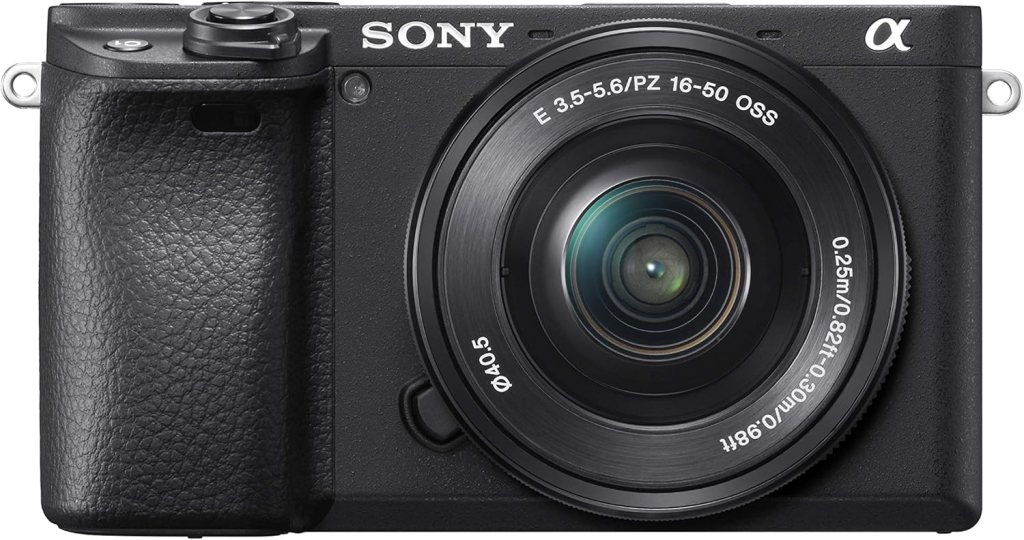
Overview of the Sony Alpha a6400 Mirrorless Camera: Compact APS-C Interchangeable Lens Digital Camera with Real-Time Eye Auto Focus, 4K Video, Flip Screen & 16-50mm Lens – E Mount Compatible – ILCE-6400L/B, Black
You’re looking at a camera marketed for hybrid shooters who want fast autofocus, solid stills performance, and 4K video in a compact body. The a6400 packs Sony’s Real-Time Eye AF, 4K recording, a flip screen, and an E-mount kit lens into a lightweight package that’s easy to take anywhere.
Key product highlights
You’ll notice the emphasis on autofocus coverage and responsiveness, with 425 phase-detection and 425 contrast-detection points that cover a large portion of the sensor. Sony rates continuous shooting up to 11 fps and highlights movie functions like time-lapse and variable speed recording without heavy post-processing.
Design and Build
The a6400’s design balances portability with a professional feel, giving you enough dials and buttons for manual control while staying small enough to carry all day. You’ll find the build quality solid for travel and street shooting, though it’s not fully weather-sealed like some higher-end bodies.
Size, weight, and handling
The camera body is compact and light, so you’ll appreciate how little strain it adds on long shoots or trips. Grip ergonomics are good for its class, letting you hold it steady for stills and video without fighting awkward contours.
Controls and menu system
Sony’s menu system can feel dense if you’re new to it, but once you map the custom buttons the camera becomes fast to operate. You’ll benefit from customizable function menus and intuitive physical controls for exposure, AF modes, and drive options.


Sensor and Image Quality
At the core of the a6400 is an APS-C sensor that produces high-resolution images with pleasing color and good dynamic range. You’ll get crisp detail in daylight and well-controlled highlights when you expose carefully.
Resolution and detail
The camera delivers 24.2 MP stills (native APS-C resolution), giving you plenty of pixels for 8×10 prints or cropping without losing quality. You’ll be able to extract fine textures and maintain good sharpness across the frame when you use quality glass.
Color rendering and dynamic range
Colors are natural and straightforward out of the camera, so you’ll spend less time correcting basic tones in post. Dynamic range is solid for an APS-C sensor: you can recover shadows and preserve highlight detail if you shoot RAW and expose considerately.
Autofocus System
The a6400’s AF system is one of its strongest selling points, designed to lock on quickly and stay on subject across varied shooting conditions. You’ll notice a big advantage when photographing moving subjects or doing run-and-gun video.
Real-Time Eye AF and subject tracking
Real-Time Eye AF works impressively well on both people and animals, reliably keeping the eye in sharp focus while you concentrate on framing. For portraits and candid shots, you’ll find it raises keeper rates because the camera prioritizes the eye automatically.
AF coverage and responsiveness
With 425 phase-detection and 425 contrast-detection points spanning around 84% of the sensor, the a6400 gives you broad, dense AF coverage. You’ll see rapid acquisition and consistent tracking even when subjects move unpredictably across the frame.

Continuous Shooting & Performance
If you photograph action, the 11 fps continuous shooting mode should make a noticeable difference in catching decisive moments. You’ll appreciate the speed combined with accurate AF, especially for sports, wildlife, and fast-paced street scenes.
Buffer and workflow considerations
Shooting lots of RAW frames at 11 fps will fill the buffer, so you’ll want a fast UHS-I or higher SD card to clear frames quickly. You’ll also want to plan how often you shoot bursts to avoid long waits while the camera writes files.
Practical action shooting tips
When you shoot continuous frames, set AF tracking mode and use a shutter priority or manual exposure to maintain consistent exposure across the burst. You’ll also increase your success rate by prefocusing where you expect the subject to be and timing the burst.
Video Features
The a6400 supports 4K video recording and several helpful movie-oriented functions, making it a good candidate for vloggers and casual filmmakers. You’ll find useful settings for monitoring, audio control, and creative shooting modes.
4K recording details
You can capture 4K video using the full width of the APS-C sensor with oversampling for clean detail, and the camera handles color nicely for straightforward post-processing. You’ll want to use good lenses and stable support when shooting 4K to maximize resolution and minimize artifacts.
Additional movie functions
Sony includes options for making time-lapse movies or creating slow/quick motion content without heavy post production, which is handy for creators who prefer in-camera tools. You’ll also get zebra and histogram overlays for exposure monitoring and a microphone input to improve audio capture.

LCD, EVF, and Monitoring
The a6400 offers a bright electronic viewfinder and a tiltable LCD that flips up for selfies and vlogging, so you can frame confidently whether you’re on a tripod or shooting handheld. You’ll appreciate accurate exposure and focus aids on both displays.
Flip screen advantages for creators
The flip-up screen makes framing yourself for vlogs and solo interviews practical and fast, and it rotates high enough for many selfie positions. You’ll enjoy seeing the live view and focus indicators when you’re in front of the lens.
EVF performance and live preview
Sony’s EVF provides a clear, lag-free preview so you’ll be able to check exposure, focus, and white balance before you press the shutter. Using the EVF is particularly helpful in bright conditions where the rear LCD can be hard to read.
Lenses and Compatibility
Because the a6400 uses Sony’s E-mount, you’ll have a wide selection of native APS-C and full-frame E-mount lenses to choose from, giving you flexibility for different subjects. You’ll benefit from the ecosystem if you plan to invest in specialized glass for portraits, macro, or telephoto work.
Kit 16-50mm power zoom lens overview
The included 16-50mm kit lens is compact and convenient for travel and general-purpose shooting, offering a useful focal range in a small package. You’ll notice its small size and power-zoom convenience, though it won’t match premium lenses for sharpness or low-light capability.
Using third-party lenses and adapters
You can mount a broad range of lenses with adapters if you want to mix legacy optics or third-party glass into your kit. You’ll gain creative options like unique bokehs or vintage rendering, but you should check autofocus compatibility and performance when using adapters.
Key specifications at a glance
This table summarizes the main specs so you can compare at a glance and decide if the a6400 suits your needs.
| Specification | Detail |
|---|---|
| Model | Sony Alpha a6400 (ILCE-6400L/B, Black) |
| Sensor | APS-C (approx. 24.2 MP effective) |
| AF Points | 425 phase-detection & 425 contrast-detection (~84% coverage) |
| Continuous Shooting | Up to 11 fps (AF/AE tracking) |
| Video | 4K recording, slow/quick motion capabilities |
| Screen | Tiltable/flip LCD (selfie/vlog friendly) |
| Kit Lens | 16-50mm E-mount power zoom |
| Connectivity | Wi-Fi, Bluetooth, micro USB, micro HDMI |
| Battery | NP-FW50 rechargeable battery (included) |
| In the Box | Body, battery, AC adaptor, strap, body/accessory caps, micro USB cable |
Low-Light Performance
You’ll be able to shoot in low-light situations reasonably well thanks to the sensor size and image processing, but results depend heavily on the lens you use and how you expose. For night scenes or dim interiors, using fast glass and higher ISOs will give you the best results.
Noise handling and high ISO behavior
Noise control is solid up to moderate ISO values, and RAW processing helps you recover detail in shadowed areas. You’ll see more grain as ISO climbs, so choose a lens with a wide maximum aperture if you plan to shoot handheld in low light often.
Battery Life & Storage
Battery life is typical for a mirrorless camera in this class: it’s fine for a few hours of mixed use, but you’ll likely carry a spare for shooting days or video sessions. You’ll also want a fast SD card (UHS-I or UHS-II depending on how many frames or video bitrate you expect to record).
Practical battery tips
Turn off Wi-Fi/Bluetooth when you don’t need them, and reduce LCD brightness to extend shooting time when you’re away from power. You’ll find that a second or third NP-FW50 battery is an inexpensive way to eliminate downtime on long shoots.
Storage and card recommendations
For burst shooting and 4K video, use high-speed cards to prevent buffering and dropped frames; UHS-I cards often work well, though UHS-II can offer faster write speeds if your workflow benefits. You’ll also benefit from backing up to a laptop or portable drive after intensive sessions.
Connectivity and Extras
The a6400 includes useful connectivity features like Wi-Fi and Bluetooth for image transfer and remote control via Sony’s mobile apps. You’ll be able to preview, transfer, and share images quickly, which is handy for social-first workflows.
Ports and external devices
You get a microphone input for better audio capture and micro HDMI for external monitoring or recording. You’ll want to add an external microphone for cleaner sound when vlogging or shooting interviews.
In the Box
You’ll receive the camera body, NP-FW50 rechargeable battery, AC adaptor, shoulder strap, body cap, accessory shoe cap, eyepiece cup, and a micro USB cable among other items. These basic accessories let you start shooting right away without immediately needing extra purchases.
| In-Box Item | Description |
|---|---|
| Camera Body | Sony Alpha a6400 ILCE-6400L/B |
| Battery | NP-FW50 rechargeable battery |
| AC Adaptor | AC-UUD12 (for charging) |
| Strap & Caps | Shoulder strap, body cap, accessory shoe cap |
| Eyepiece | Eyepiece cup |
| Cable | Micro USB cable |
Pros and Cons
You’ll find that the a6400 offers class-leading autofocus, compact handling, and versatile video features, making it a strong all-around camera for many users. On the downside, battery life and weather sealing are not class-leading, and the kit lens is functional but not exceptional.
Pros
- Stellar Real-Time Eye AF and subject tracking that boosts keeper rate for portraits and moving subjects.
- 4K video and practical in-camera movie options for creators.
- Compact body that’s easy to carry and comfortable for long use.
- Wide AF coverage and fast continuous shooting for action photography.
Cons
- Battery life can be limiting for extended shoots without spares.
- The kit 16-50mm lens is handy but not as sharp or bright as premium lenses.
- Menus and customizable settings have a learning curve if you’re new to Sony.
- Not fully weather-sealed in the base configuration.
Who should buy the a6400?
If you’re a content creator, vlogger, or enthusiast photographer who values fast autofocus and portability, this camera could be a great fit. You’ll especially like it if you want strong people-tracking AF, reliable 4K video, and a small body that doesn’t compromise on features.
Who might prefer something else
If you need extended battery life, full weather sealing, or extreme low-light performance, you might prefer a larger body or a full-frame system. You’ll want to consider higher-tier Sony bodies or different manufacturers if those specific features are critical.
How to get the most from your a6400
Master the custom button assignments and function menu so you can change critical settings without digging through menus. You’ll also want to spend time learning Real-Time Eye AF behaviors so you can rely on it in fast-moving shooting situations.
Recommended settings for portraits
Set the camera to aperture priority or manual mode with a wide aperture lens to separate subjects from the background, and enable Eye AF for continuous focus on faces. You’ll also try single-point AF for precise placement when you want to control focus placement.
Recommended settings for landscapes
Use a narrower aperture (f/8–f/11) for greater depth of field, set ISO low for image quality, and shoot RAW for maximum editing headroom. You’ll benefit from a tripod and remote release to eliminate motion blur for long exposures.
Recommended settings for video
Record 4K when you want maximum resolution, and use picture profiles sparingly unless you want to grade footage extensively. You’ll enable continuous AF tracking for run-and-gun shoots but consider manual focus pulls for cinematic looks.
Comparison with nearby models and alternatives
Compared to its predecessors and many competitors, the a6400 strikes a balance between price, performance, and portability. You’ll find that it’s a stronger performer in AF and video than many entry-level models, but some newer models may offer improvements in IBIS or sensor tech.
a6400 vs a6300 / a6500
The a6400 generally improves autofocus and video usability over the a6300, with better Eye AF and menu updates. Compared to the a6500, it trades in-body image stabilization (IBIS) for improved AF algorithms, so you’ll choose based on whether stabilization or tracking is more important to you.
Common mistakes to avoid
Don’t rely solely on the kit lens for everything; you’ll see better results with faster primes or higher-quality zooms for low light and critical detail. Also, don’t ignore firmware updates; Sony periodically improves AF performance and fixes bugs, so keeping firmware current will give you the best experience.
Practical shooting scenarios and workflows
When you’re doing street photography, keep the camera in AF-C with a wide AF area and use a mid-range focal length to react quickly. For travel and family shoots, use the flip screen to capture selfies and quick vlogs without complex setups, and backup your files daily to avoid loss.
Vlogging and solo creation
For vlogging, mount a small shotgun mic on the hot shoe and monitor audio with a headphone adapter if you have it, then use the flip screen to confirm framing. You’ll benefit from a light, fast lens (like a 16–50 or a 24mm prime equivalent) for natural-looking framing.
Portraits and events
For events and portraits, use Eye AF on continuous mode and a medium telephoto lens to create flattering compression and separation. You’ll be more successful with wider apertures in low light and careful attention to shutter speed to freeze motion or add intentional blur.
Accessories that pair well with the a6400
Consider a small gimbal for stabilized video, a fast prime (35mm or 50mm equivalent) for low-light and portrait work, and spare NP-FW50 batteries for extended use. You’ll also like a good camera bag that fits lenses, a tripod for long exposures, and a quality external mic for interviews.
Final thoughts
If you want a compact mirrorless camera that prioritizes autofocus performance and offers strong 4K video tools, the Sony Alpha a6400 is a compelling choice that will serve many creators and photographers well. You’ll get a reliable balance of speed, image quality, and portability — just plan to augment the kit lens and batteries to unlock the camera’s full potential.

Disclosure: As an Amazon Associate, I earn from qualifying purchases.