

? Are you trying to decide whether the Sony RX100 VII Premium Compact Camera with 1.0-type stacked CMOS sensor (DSCRX100M7) is the right compact camera for your needs?

Quick first impression
You’ll notice right away that this is a premium compact camera designed to give you DSLR-like performance in a pocketable body. The RX100 VII packs advanced autofocus, a fast zoom lens, and strong video features, so it’s meant for photographers and creators who want serious capability without a bulky camera.
Key specifications at a glance
You should find it helpful to have the most important specs grouped together so you can quickly compare them to other cameras or to your needs. Below is a clear breakdown of the main hardware and performance figures.
| Feature | Specification |
|---|---|
| Sensor | 20.1 MP 1.0-type stacked Exmor RS CMOS |
| Lens | ZEISS Vario-Sonnar T* 24–200mm (equiv.) F2.8–F4.5 |
| AF system | 357 focal-plane phase-detection AF + 425 contrast-detection AF |
| AF speed | 0.02 sec (high AF speed) |
| Continuous shooting | Up to 20 fps blackout-free, AF/AE recalculation up to 60x/sec |
| Video | 4K (with S-Log3), interval shooting (time-lapse), Active mode stabilization for 4K |
| Real-time tracking | AI-based real-time tracking for stills & movies, touch tracking |
| Eye AF | Real-time Eye AF for humans (stills & movies), animals (stills only) |
| Stabilization | Active Mode optical image stabilization for 4K video |
| Ports | External microphone jack |
| Special | Vertical position data recording, Movie Edit add-on compatible |
| Operating temperature | 0°C to +40°C (32°F to 104°F) |
| Diopter adjustment | -4.0 to +3.0 m^-1 |
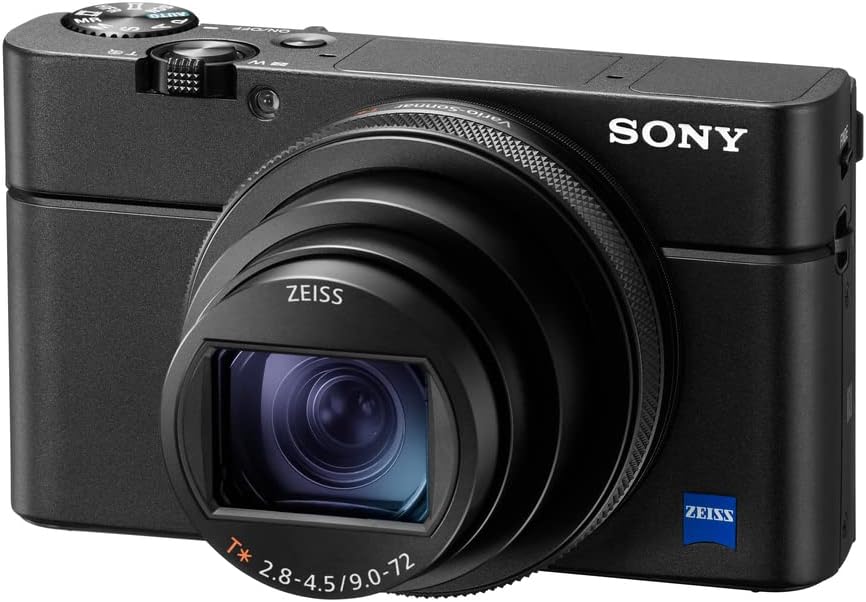

Design and build quality
You’re getting a compact metal body with a premium feel that’s durable yet small enough to fit in a jacket pocket. The controls are laid out to give you quick access to key functions, and the build quality feels like a higher-end compact rather than a toy.
Size, weight, and ergonomics
Because the RX100 VII is designed to be pocketable, you’ll notice a small grip and compact form. That means you may need to be mindful of handling for long shoots, but the camera balances well in one hand for quick snaps and travel photography.
Viewfinder and screen
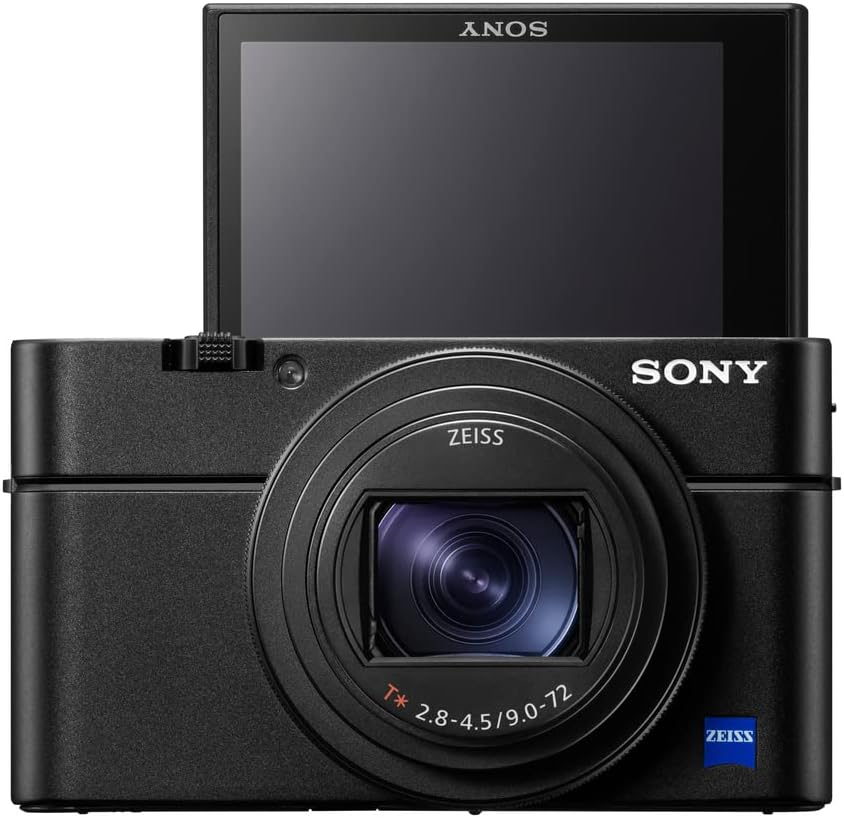
You’ll appreciate the pop-up electronic viewfinder that’s bright and useful in strong light, and the rear LCD tilts for selfie or vlogging angles. The touch screen lets you change focus points quickly and works smoothly with touch tracking and real-time AF.
Lens performance: 24–200mm F2.8–F4.5
The zoom range on this camera is one of its biggest selling points: a true all-in-one 24–200mm equivalent. You’ll be able to shoot wide to moderate telephoto without changing lenses, which is ideal for travel and everyday use.
Optical quality and sharpness
You can expect excellent sharpness in the wide and short-tele ranges, with very good contrast thanks to ZEISS optics and the T* coating. At the longest end (200mm equivalent) you’ll still get usable detail, though you may notice some falloff in corner sharpness and a bit more compression of background detail.
Aperture and low-light behavior
The F2.8 aperture at the wide end gives you strong low-light capability and better subject separation; the variable aperture narrows to F4.5 at telephoto. You’ll still be able to get good results in low light thanks to the 1.0-type sensor, but for extreme low-light scenes you might need to raise ISO or rely on stabilization.

Sensor and image quality
You’re getting a 20.1MP 1.0-type stacked CMOS sensor, which delivers fast readout and high-quality images. The stacked design helps the camera achieve quick autofocus and burst performance while maintaining good dynamic range and color fidelity.
Dynamic range and color
The RX100 VII gives you pleasing color straight out of camera and solid dynamic range for the class. If you shoot RAW and use S-Log3 in video or apply gentle exposure recovery in stills, you’ll be able to retain highlight and shadow detail effectively.
Noise performance and high ISO
You’ll find noise is well controlled up to moderate ISOs. At higher ISOs you’ll start to see more grain and some noise reduction smoothing, but noise handling is impressive for a 1.0-type sensor in this compact size.
Autofocus system and speed
Sony’s autofocus implementation in this model is one of the best in compact cameras. With 357 focal-plane phase-detection AF points and 425 contrast-detection points, you’ll enjoy fast and reliable focusing across most of the frame.
AF speed and accuracy
The claimed 0.02 second AF speed is very real in many situations — you’ll be able to lock onto faces and subjects quickly, even in mixed lighting. Combined with AI-based real-time tracking, you’ll be able to track moving subjects effectively in both stills and video.
Eye AF and subject tracking
You can rely on Real-time Eye AF for human subjects in both stills and movies, and Real-time Eye AF for animals when shooting stills. This makes portrait work, candid street photography, and pet photography much simpler because the camera maintains focus on the subject’s eyes.
Continuous shooting and buffer behavior
When you want to capture action, the RX100 VII offers up to 20 fps blackout-free continuous shooting. You’ll also benefit from high-speed AF/AE calculations, performed up to 60 times per second, which helps keep exposures and focus consistent across bursts.
Blackout-free shooting and AF/AE calculations
Shooting without viewfinder blackout makes tracking easier because you can watch the action in real time as you shoot. The fast AF/AE calculation rate ensures the camera responds to movement and changing light during continuous bursts.
Practical buffer and file handling
In real-world shooting you’ll find the buffer can handle fairly long bursts of JPEGs and a reasonable number of RAW frames before slowing. If you shoot very long bursts of RAW or continuous 4K video, you’ll want to keep an eye on card speed and remaining buffer capacity.
Video capabilities and functionality
You’re getting robust 4K recording options, including S-Log3 and interval shooting for time-lapse. The RX100 VII is suitable for vloggers and content creators who need high-quality 4K footage from a compact body.
4K recording and S-Log3
The camera records high-quality 4K footage with good detail and color fidelity, and S-Log3 gives you more dynamic range in post. If you plan to grade footage, S-Log3 is a powerful tool; if you prefer straight-out-of-camera footage, the standard picture profiles still perform very well.
Stabilization and Active Mode
Active mode image stabilization is available for 4K video, which helps you capture smoother handheld footage, especially at longer focal lengths. You’ll still benefit from using a gimbal for very smooth cinematic movement, but for run-and-gun vlogging and handheld shooting the stabilization is excellent.
Audio and external mic support
Because the RX100 VII includes a microphone jack, you’ll be able to use an external shotgun mic, which dramatically improves audio quality for interviews, vlogs, and dialogue. Good audio paired with strong video makes the camera versatile for solo creators.
Handling, controls, and ergonomics for video
You’ll find the controls are compact but intuitive, and the tilting screen helps with framing while vlogging. The touchscreen makes switching focus points simple, and the real-time tracking works well when you tap the subject to lock focus.
Portraits, vertical shooting, and metadata
An interesting feature is vertical position data recording, which tags vertical orientation to help with social media posting workflows. You’ll appreciate this small convenience if you create vertical content for platforms like Instagram or TikTok.
Connectivity and workflow
You can connect the camera wirelessly to your phone for image transfer and remote control, and include metadata helpful for post-processing. The built-in Wi-Fi and Bluetooth make it easy for you to keep your workflow mobile and fast.
File transfer and remote control
If you want to send images to your phone for instant sharing, the connectivity options are straightforward and reliable. You can also remotely trigger the camera and access some settings via Sony’s mobile apps.
Movie Edit add-on compatibility
The RX100 VII is compatible with Sony’s Movie Edit add-on, which gives you quick editing tools for your footage right on the camera. These tools help you trim and compile clips without immediately needing a computer.

Battery life and storage
Because of the compact body, battery capacity is smaller than on larger cameras, so you’ll want to carry spares for extended shoots. Fast memory cards help maintain buffer performance, especially in continuous shooting and high-bitrate 4K recording.
Practical tips on battery usage
You’ll get decent performance for a day of casual shooting, but for long sessions, vlogging days, or travel you should pack at least one spare battery. Turning off features like Wi-Fi when not needed and minimizing screen use will help conserve power.
Recommended memory cards
For continuous shooting and 4K recording, choose fast UHS-I or UHS-II SD cards with high write speeds. A high-speed card helps you make full use of the buffer and reduces the chance of dropped frames during long video recordings.
Low-light and night shooting
You’ll find the RX100 VII handles low-light scenes better than typical compact cameras thanks to its larger 1.0-type sensor and fast wide-aperture setting. Combine this with the camera’s AF abilities and stabilization, and you’ll be able to capture usable images in many dim situations.
Practical low-light tips
Use wider apertures, steady the camera (or use Active mode stabilization for video), and raise ISO cautiously to balance exposure and noise. If you shoot RAW, you’ll have more latitude to recover shadows and reduce noise in post.
Who is this camera for?
If you want a single camera that covers most focal lengths, shoots high-quality 4K video, and fits in your pocket, this is a strong choice. The RX100 VII is ideal for travelers, vloggers, street photographers, and content creators who value portability without sacrificing advanced features.
Not for everyone: when to look elsewhere
If you need extremely long telephoto reach, interchangeable lenses, or the absolute best low-light performance, you may want to look at mirrorless cameras with larger sensors and lens systems. You’ll also want to consider larger bodies if battery life and rugged weather sealing are top priorities.
Shooting scenarios and sample use cases
You’ll find the camera adapts well to many styles of shooting, from street and documentary to travel and short-form video. Below are practical suggestions for how to use the RX100 VII in typical situations.
Travel and street photography
The small size and versatile zoom make it easy to carry and to react to spontaneous scenes. You’ll be able to capture wide environmental shots at 24mm and close-in details at 200mm without stopping to change lenses.
Vlogging and run-and-gun video
With 4K, Active stabilization mode, microphone input, and a tilting screen, you’ll be well-equipped to produce high-quality vlogs. The real-time tracking and touchscreen focusing keep subjects sharp while you move and talk.
Wildlife and action
The long end of the zoom and fast autofocus help you capture distant subjects and fast movements, but you’ll be limited compared to larger telephoto systems. You’ll get many excellent shots of birds in closer range or wildlife at moderate distances.
Portraits and candid people shots
The lens and sensor combination gives you pleasing subject isolation at wide apertures, especially for head-and-shoulder portraits. You’ll particularly benefit from Eye AF when shooting people and animals; the camera keeps faces in sharp focus even in casual, fast-paced settings.
Menu system and customization
You’ll find Sony’s menu system dense but highly customizable, so you can map buttons and prioritize the settings you use often. Spending time customizing the control layout will make your shooting faster and more intuitive.
Creating custom setups
You can assign favorite functions to custom buttons and save shooting profiles, which is extremely useful when switching between video and stills or different subject types. You’ll appreciate being able to quickly jump to a custom mode when conditions change.
Pros and cons (concise)
You’ll want to weigh the main strengths and weaknesses when making a buying decision. Below are the standout positives and the main compromises to consider.
Pros
- Exceptional autofocus system and real-time tracking.
- Versatile 24–200mm equivalent lens in a pocketable body.
- Excellent 4K video features including S-Log3 and Active stabilization.
- Real-time Eye AF for humans (stills & movies) and animals (stills).
- Pop-up EVF and tilt touchscreen for flexible shooting.
- Microphone jack for improved audio capture.
Cons
- Battery life is limited; bring spares for extended use.
- Variable aperture can limit low-light telephoto performance compared to prime lenses.
- No in-body front or top physical controls as found on larger mirrorless models.
- Not weather-sealed to the level of rugged DSLR or prosumer bodies.
Comparisons to likely alternatives
If you’re thinking about alternatives, you’ll likely compare the RX100 VII to other premium compacts and small mirrorless bodies. You’ll find tradeoffs between portability, zoom range, and versatility.
RX100 VII vs other RX100 models
Compared to earlier RX100 models, this version brings much faster AF, better subject tracking, and a longer zoom range than some previous high-end variants. You’ll notice smoother video features and stronger autofocus performance compared to older RX100 generations.
RX100 VII vs small mirrorless cameras
If you’re weighing a small mirrorless camera with interchangeable lenses, the RX100 VII wins on convenience and portability but loses on expandability and absolute image quality headroom. You’ll want mirrorless bodies if you plan to grow into many lenses or need professional-level weather sealing and battery life.
Tips and recommended settings
You’ll get better results faster by using a few key settings tailored to what you’re shooting. Below are practical suggestions you can try right away.
Still photography
- Use Aperture Priority (A) for quick exposure control; set a lower aperture (f/2.8–f/4) for subject separation.
- Turn on Eye AF and set touch focus to quickly lock onto faces.
- Shoot RAW if you plan to edit for maximum dynamic range and color control.
Video
- Use 4K with Active mode stabilization for handheld clips.
- Record with an external mic for clean audio; monitor levels if possible.
- Use S-Log3 only if you plan to color grade; otherwise use a standard profile for quicker edits.
Maintenance and care
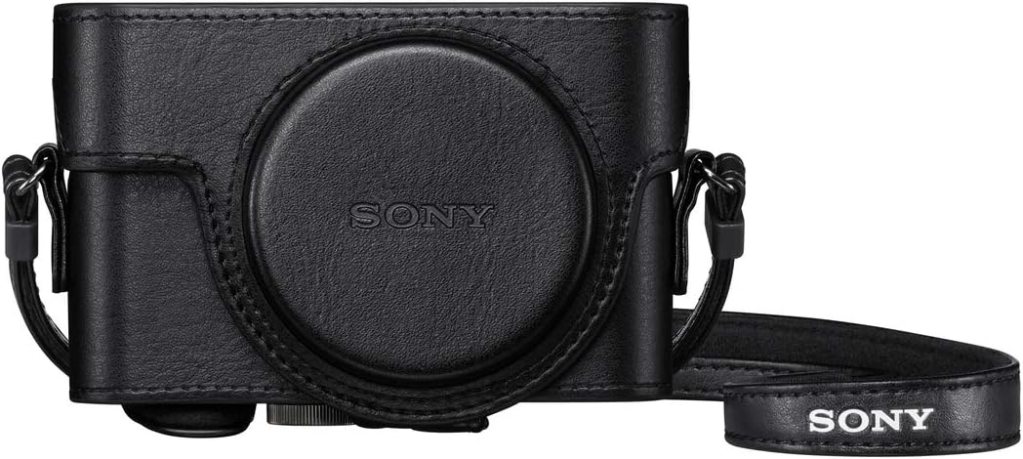
You’ll want to keep the camera clean and protect the lens when not in use. Because it’s a compact, it’s more exposed to bumps and scratches, so a small padded case and a lens cap are worth the investment.
Cleaning and storage
Use a blower and microfiber cloth for lens and sensor care, and store the camera in a dry, temperature-controlled place. Keep spare batteries charged and remember to format memory cards in-camera rather than on your computer to avoid file errors.
Final recommendation
If you want a powerful pocketable camera that delivers advanced autofocus, a useful zoom range, and strong video features, you’ll find the Sony RX100 VII to be an outstanding choice. It’s particularly well suited to content creators, travelers, and photographers who need a single versatile camera that’s easy to carry.
Should you buy it?
You should buy the RX100 VII if portability, excellent autofocus, versatile focal length, and top-tier video in a compact are priorities for you. If your needs include interchangeable lenses, extreme low-light performance, or extended battery life, you may want to consider a larger mirrorless system instead.
Frequently asked questions (FAQ)
You’ll probably have some common questions; here are quick answers to what most buyers ask before purchasing.
How portable is the RX100 VII for travel?
It’s highly portable and designed to be carried daily in a coat pocket or small bag. You’ll appreciate how it reduces the need for larger kits while still covering many focal lengths.
Can it replace my DSLR or mirrorless camera?
It can replace those systems for many users, especially if you prefer simplicity and portability. You’ll sacrifice lens interchangeability and some raw low-light headroom, but gain enormous convenience.
Is the autofocus good for sports and wildlife?
The AF is extremely capable for its class and works well for moderate action and wildlife at closer ranges. You’ll still find professional long-telephoto systems superior for distant birds or high-speed pro sports.
Is external audio supported for vlogging?
Yes — the camera includes a microphone jack so you can use an external shotgun or lavalier mic. You’ll get significantly better audio quality compared to the internal mic alone.
Is the camera weather sealed?
No, it’s not sealed to professional weatherproof standards, so you’ll want to avoid heavy rain and extreme dust without protection. You’ll find care and some common-sense protection are necessary for rugged conditions.
If you want, you can tell me which type of shooting you do most often (travel, portraits, pets, vlogging, sports), and I’ll give you a personalized setup checklist and recommended camera settings for that use.

Disclosure: As an Amazon Associate, I earn from qualifying purchases.