

?Is the Sony a7 III (ILCEM3K/B) with the 28-70mm kit lens the camera that fits your photography and video needs?
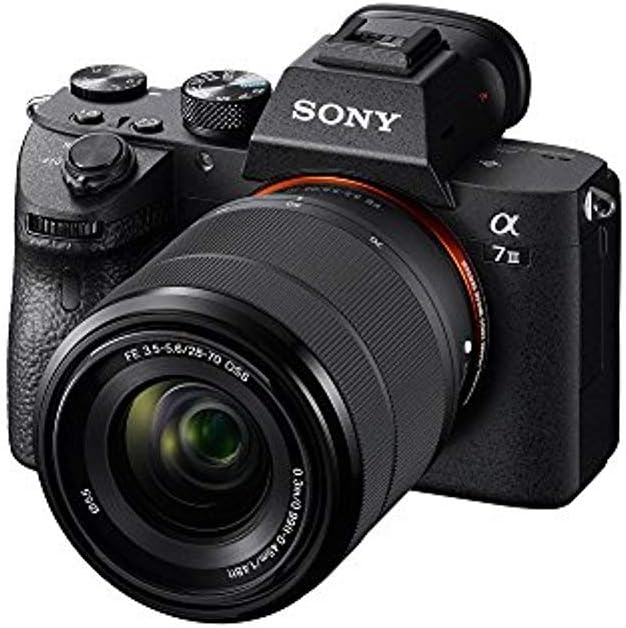

Overview and first impressions
You’ll notice the Sony a7 III feels like a serious upgrade the moment you pick it up. The combination of a 24.2MP back-illuminated full-frame sensor, robust autofocus system, and in-body stabilization gives you a camera that balances image quality, speed, and usability for most shooting situations.
What this kit includes
You get the camera body plus the FE 28-70mm kit lens and a practical set of accessories that let you start shooting right away. In the box you’ll find the SEL2870 lens, lens hood, lens cap, lens rear cap, rechargeable battery (NP-FZ100), AC adapter (AC-UUD12), shoulder strap, body cap, accessory shoe cap, eyepiece cup, and a Micro USB cable.
Key specifications at a glance
This section gives you a compact snapshot of the a7 III’s most important numbers so you can quickly assess whether it matches your needs. The table below breaks down core specs and what they mean in practical terms.
| Category | Specification | Practical meaning for you |
|---|---|---|
| Sensor | 24.2MP Back-Illuminated 35mm Full-frame (Exmor R) | High-resolution, great dynamic range, improved low-light performance |
| Dynamic Range | Up to 15 stops | You’ll retain more highlight and shadow detail for landscapes and high-contrast scenes |
| ISO Range | Listed ISO 50 to 204,800 (typical: 100–51,200 expandable) | Flexibility in low light; expect noise control improvements over older models |
| AF System | 693 phase-detect / 425 contrast AF points, 93% coverage | Fast, accurate subject detection and wide coverage for tracking moving subjects |
| Continuous Shooting | Up to 10 fps with AF/AE tracking | Great for action, wildlife, and fast-moving events |
| In-body Stabilization | 5-axis SteadyShot INSIDE (up to ~5 stops) | Lets you shoot handheld at slower shutter speeds with less blur |
| Video | 4K up to 30p (full-frame/Super35 modes), FHD up to 120p | Solid hybrid video capability with S-Log options for grading |
| Shutter | Mechanical and silent electronic shutter, up to 1/8000s | Flexibility for bright light and discreet shooting |
| Storage | Dual SD slots (one UHS-II compatible) | Redundancy, overflow, or separation of RAW/JPEG/files |
| Battery | NP-FZ100 | Significantly better endurance than earlier Sony bodies |
| Connectivity | Micro HDMI, USB-C, mic & headphone jacks, Wi‑Fi/Bluetooth | Good for tethering, audio monitoring, and wireless transfer |
| Weight | Body ~650 g (battery & card) | Manageable for long shoots with a comfortable grip |

Design and build quality
The a7 III has a solid, refined build that fits well in your hands without feeling bulky. The magnesium alloy shell and weather-sealed joints give you confidence shooting outdoors and in challenging conditions.
Buttons, dials, and the grip
Sony improved the ergonomics over earlier models, and you’ll appreciate the deeper grip and more pronounced control layout. The top plate includes two customizable dials plus an exposure compensation dial, which makes manual adjustments quick and intuitive while shooting.
Viewfinder and LCD
The electronic viewfinder is sharp and responsive, giving you a bright and clear preview for composition and focus. The 3.0-inch tilting LCD is helpful for low and high-angle shots and provides touch focus and menu navigation for faster operation.
Handling and ergonomics
If you’re switching from a DSLR, you’ll find the a7 III’s layout familiar enough to adapt quickly, while the size and weight balance keeps your kit portable. The body design favors longer handheld sessions without causing strain, and the placement of function buttons is customizable to follow your workflow.
Menu system and customization
Sony’s menu system can feel dense at first, but you’ll get mileage from the customization options once you set them. You can assign frequently used functions to custom buttons (C1, C2, etc.) and tailor the Fn menu for quick access to the tools you use most.
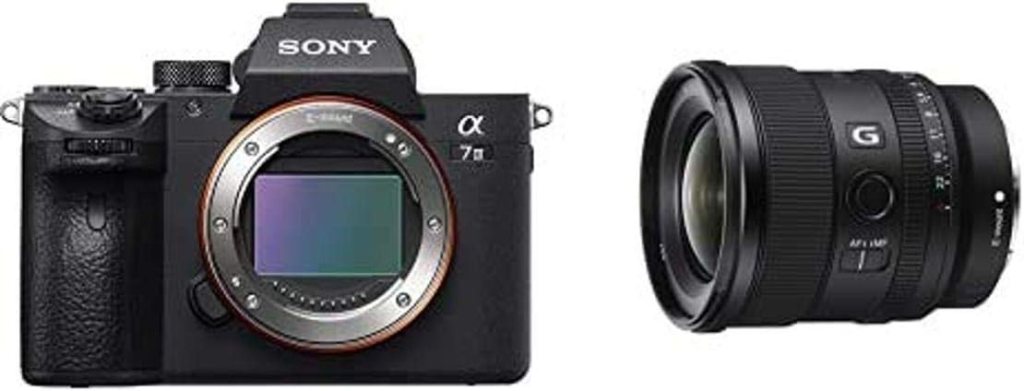
Sensor and image quality
The 24.2MP back-illuminated full-frame sensor delivers excellent detail, strong dynamic range, and impressive low-light performance. You can expect clean RAW files that respond well to post-processing without losing tonal subtlety.
Dynamic range and color rendering
With roughly 14–15 stops of dynamic range, the a7 III captures retained highlight and shadow detail that’s useful for landscape and studio work. Colors are pleasing straight out of the camera and respond well to color grading if you shoot in S-Log or RAW.
High ISO performance
The BSI sensor and modern image processing mean you’ll get usable images at elevated ISOs. Noise is well-controlled up to mid-high ISO values, and the in-body stabilization helps you avoid raising ISO as often by enabling slower shutter speeds.
Autofocus system and subject tracking
The 693 phase-detection points combined with 425 contrast-detection points cover most of the frame, giving you wide-area focus and strong subject acquisition. In practical terms, you’ll experience reliable tracking for people, animals, and many moving subjects in varied lighting.
Eye AF and subject recognition
The a7 III’s Eye AF (including later firmware improvements) makes portrait work noticeably easier because you can rely on the camera to lock onto the subject’s eye. You’ll also be able to maintain focus on a subject even if they briefly move behind obstacles, thanks to the camera’s tracking algorithms.
Low-light AF sensitivity
Autofocus remains effective in dim conditions where other systems struggle, allowing you to lock focus in situations that would have required manual focus on older cameras. This is valuable for event, wedding, and night shooting.
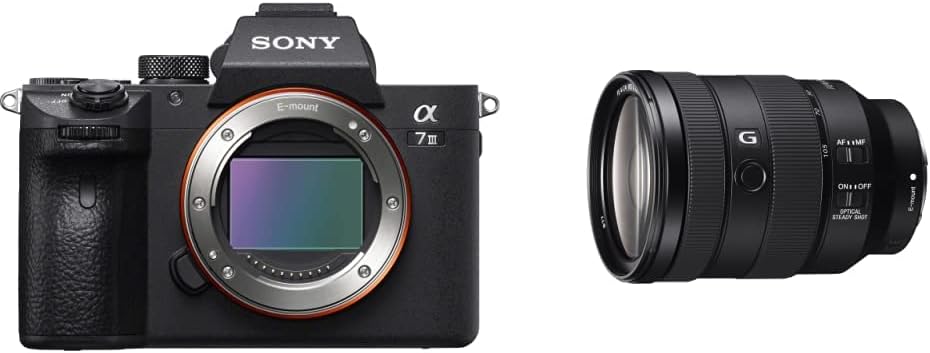
Shooting speed and shutter performance
When you need bursts of frames, the a7 III’s continuous shooting up to 10 fps is responsive and useful for action, wildlife, and fleeting moments. The combination of a fast shutter and AF tracking keeps more frames in focus during sustained bursts.
Mechanical vs. silent shutter
You can choose the quiet electronic shutter for situations that demand discretion or the mechanical shutter for maximum reliability and compatibility with flash. Both modes support 10 fps shooting with AF/AE tracking, so you won’t lose speed when opting for silence.
In-body image stabilization (IBIS)
The 5-axis IBIS reduces camera shake and makes handheld shooting much more practical across many lenses. When paired with stabilized lenses, the combined effect gives you an edge in low-light handheld photography and smoother video.
Practical benefits for different types of shooting
You’ll see sharper handheld shots at slower shutter speeds and smoother panning for video, which is especially helpful when you don’t want to carry a gimbal. IBIS also gives you more creative freedom to shoot in available light without pushing ISO too high.

Video capabilities
The a7 III is capable as a hybrid camera, offering 4K recording with good detail and color latitude for grading. You can work in S-Log2/3 and HLG for HDR workflows, and you’ll find the camera’s audio inputs helpful for higher-quality sound.
4K and high-frame-rate options
You can record 4K up to 30p using either full-frame or Super35 modes for different field-of-view options, and Full HD up to 120p gives you slow-motion flexibility. The camera handles video tasks well enough for run-and-gun projects, corporate videos, and short films.
Audio and monitoring
With both a microphone input and a headphone jack, you can monitor audio while recording and ensure sound quality on the spot. This feature makes the a7 III more practical for serious video work than cameras that lack headphone monitoring.
Storage, connectivity, and file management
Dual card slots provide redundancy and flexible workflows, and one slot supports UHS-II speeds for faster write times when shooting high-bitrate video or long continuous bursts. You’ll appreciate the ability to split RAW and JPEG files between cards or use one as a backup.
Wireless and wired connections
The a7 III offers Wi‑Fi and Bluetooth for quick image transfer to your phone, and physical ports like USB-C and micro-HDMI for tethering or external recording. These options make it easy to move files from camera to computer or stream video to external devices.

Battery life and power options
The NP-FZ100 battery gives you significantly better endurance than older Sony mirrorless batteries, so you’ll spend less time swapping cells mid-shoot. Depending on your usage—stills-heavy or video-heavy—you should be able to get through a long day with one or two spares.
Charging and USB power
You can charge the battery in-camera with the supplied AC adapter or use USB power for extended sessions. Having USB charging as an option makes travel and on-location work more convenient because you can use portable power banks.
The included 28-70mm kit lens (SEL2870)
The FE 28-70mm f/3.5-5.6 is a practical starter optic that keeps your kit compact and light. It won’t replace a fast prime or a high-end zoom, but it gives you a versatile focal range for general-purpose shooting right out of the box.
Optical performance and use cases
Sharpness is solid in the center at most focal lengths, and corner performance is acceptable for everyday pictures, especially when stopped down a bit. The lens includes optical stabilization, which complements the body’s IBIS and helps when you’re shooting handheld in lower light.
When you’ll want to upgrade
If you shoot a lot of portraits, low-light events, or need the shallow depth-of-field of faster lenses, you’ll want to upgrade to a prime like a 35mm f/1.8 or 50mm f/1.8, or consider Sony’s G Master zooms for higher resolving power. The kit lens is a pragmatic starting point but not the final word for optical performance.
Practical shooting scenarios and recommended settings
This camera adapts well to many types of photography, so let’s go through a few common scenarios and the settings that usually work well.
Portraits
For portraits, you’ll want to use Aperture Priority (A) or Manual (M) with a wide aperture on a fast prime for creamy bokeh. Turn on Eye AF and use single-point or zone AF to ensure the subject’s eye is sharp.
Landscapes
For landscapes, stop down to f/8–f/11 for optimal sharpness, keep ISO low (100 or base), and use a tripod for maximum dynamic range. Shoot RAW to recover highlights and shadows, and consider using an ND or polarizing filter when needed.
Action and wildlife
Use Shutter Priority (S) or Manual with shutter speeds of 1/500s or faster depending on the subject, enable continuous AF and high-speed shooting (10 fps), and pick a wide AF area or tracking mode. If you’re shooting birds or distant wildlife, pair the body with a longer telephoto lens.
Low-light and events
Take advantage of IBIS and fast glass to keep shutter speeds reasonable; raise ISO only as needed. Use AF sensitivity and Eye AF for people, and consider using silent mode for concerts or ceremonies.
Workflow and post-processing tips
RAW files from the a7 III respond very well to adjustments, so capture RAW when you can to keep flexibility. Use noise reduction sparingly at higher ISOs and take advantage of the dynamic range to recover highlights and shadows rather than pushing exposure aggressively in-camera.
Color profiles and picture styles
S-Log2/3 gives you the most latitude for grading in video but requires careful exposure and color work. For stills, try different Picture Profiles (or shoot RAW and profile later) to find what matches your aesthetic.
Pros and cons
You’ll appreciate a lot about the a7 III, but no camera is perfect; the points below summarize what you’ll most likely find positive and what could be limiting.
Pros
- Excellent overall image quality and dynamic range that suits many genres.
- Robust autofocus system with wide coverage and reliable Eye AF.
- Great battery life for a mirrorless body thanks to the NP-FZ100.
- Dual card slots and one UHS-II slot for flexible workflows.
- In-body stabilization that meaningfully reduces camera shake.
- Solid video features including 4K, S-Log, and headphone monitoring.
Cons
- The kit 28-70mm lens is functional but not exceptional optically or in low light.
- Sony’s menu system can feel complex until you customize it to your workflow.
- Native lens options that fully exploit the sensor can get expensive.
- Some advanced video users may miss higher frame rates or internal 10-bit recording.
Who should buy the Sony a7 III?
If you want a versatile, full-frame mirrorless camera that handles portraits, landscapes, events, and run-and-gun video well, the a7 III is a strong choice. You should consider it if you value image quality, autofocus reliability, and in-body stabilization in a reasonably compact body.
Who might look elsewhere
If you need the absolute highest resolution for large-format prints, you might prefer a higher-megapixel body. If you are focused exclusively on cinema-grade video codecs and internal 10-bit recording or raw over extended durations, a dedicated cinema camera might suit you better.
Accessories and complementary gear
To get the most from your a7 III, consider adding fast primes, a telephoto for sports or wildlife, and a sturdy tripod for landscape and long exposure work. A spare NP-FZ100 battery and a UHS-II SD card are both smart purchases for extended and professional shoots.
Recommended lens upgrades
- 35mm f/1.8 or 50mm f/1.8 for portraits and low light.
- 24-70mm f/2.8 G Master for a versatile professional zoom.
- 70-200mm f/4 or f/2.8 for wildlife and sports.
These lenses will unlock more of the a7 III’s potential, especially in low-light and portrait scenarios.
Maintenance and care
Treat the mount and sensor carefully when changing lenses to avoid dust, and use a blower for small particles. Keep firmware updated to benefit from autofocus improvements and other enhancements Sony has released over time.
Firmware and future updates
Sony has historically improved features via firmware updates, so check for updates after purchase. Updating firmware can sometimes bring better autofocus, improved stability, and additional features that extend the camera’s lifespan.
Final thoughts and verdict
If you want a balanced full-frame mirrorless camera that gives you strong image quality, reliable autofocus, and professional features without an extreme price tag, the Sony a7 III is an excellent all-rounder. It’s a camera that grows with you: it performs well as a starter full-frame camera and remains capable enough to be a long-term tool as you upgrade lenses and push into more demanding projects.
Summary recommendation
You should buy this kit if you want a flexible, high-performing full-frame camera with a reasonable starter lens and the option to upgrade optics as your needs evolve. The a7 III will serve hobbyists, enthusiasts, and many professionals well across photography and video tasks.
Quick reference: In-the-box checklist
You can use this short list to confirm everything is included when your package arrives and to guide any early planning for extra accessories.
- Sony a7 III camera body (ILCEM3K/B)
- SEL2870 28–70mm kit lens
- Lens hood, lens cap, and lens rear cap
- Rechargeable battery NP-FZ100 and AC adapter AC-UUD12
- Shoulder strap, body cap, accessory shoe cap, eyepiece cup
- Micro USB cable
If you want, I can provide a printable checklist or a recommended accessories list tailored to the type of photography or video you plan to do.

Disclosure: As an Amazon Associate, I earn from qualifying purchases.